
In 2023, a progressive wheat farmer in Madhya Pradesh faced declining yields due to inefficient flood irrigation methods. Water waste exceeded 50%, uneven distribution caused patchy crop growth, and labor costs for manual irrigation were unsustainable.
After consulting with sprinkler irrigation suppliers Indore, the farmer invested in a center pivot system covering 25 acres. The installation included mainline pipes, lateral lines with sprinkler heads, pressure regulators, and automated control systems.
Within the first growing season, results exceeded expectations. Water consumption decreased by 40%, wheat yield increased by 35%, and labor requirements dropped by 60%. The uniform water application achieved through the system eliminated dry patches and waterlogged areas that had plagued previous harvests. This transformation demonstrates why agricultural sprinkler systems are revolutionizing farming practices across India.
What Is a Sprinkler Irrigation System? Understanding the Basics
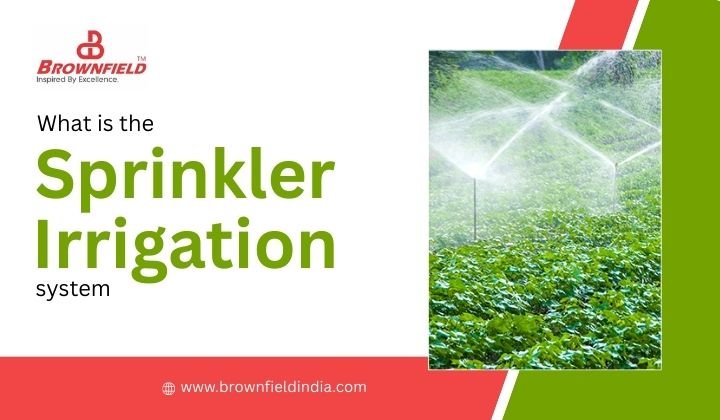
A sprinkler irrigation system is a modern pressurized irrigation system that distributes water through a network of pipes and sprays it over crops similar to natural rainfall. This method provides overhead water distribution that covers large areas efficiently while conserving water compared to traditional irrigation techniques.
The system operates by pumping water through pipes under pressure and releasing it through specially designed sprinkler heads. These heads break water into small droplets that fall gently onto crops, soil, and plants, mimicking natural precipitation patterns.
Sprinkler irrigation has become essential for agricultural water management across diverse farming operations. From small vegetable gardens to large commercial farms, this technology offers precise control over water application rates, timing, and distribution patterns.
How Sprinkler Irrigation Works: The Complete Process
How sprinkler irrigation works involves several interconnected components working together to deliver water efficiently. The process begins at the water source, which may be a well, pond, river, or municipal supply.
A pump draws water from the source and pressurizes it to levels typically ranging from 20-80 PSI depending on system design. This pressurized water flows through mainline pipes that transport it to different field sections.
Lateral pipes branch from the mainline and carry water to individual sprinkler heads strategically positioned throughout the field. The sprinkler heads rotate or oscillate, distributing water in circular or rectangular patterns that overlap to ensure complete coverage.
Control valves, pressure regulators, and timers manage water flow, pressure levels, and irrigation schedules. Modern automatic sprinkler systems for farms incorporate sensors and controllers that adjust operation based on soil moisture, weather conditions, and crop requirements.
Types of Sprinkler Irrigation Systems
1. Fixed Sprinkler Systems
Fixed or stationary systems install permanent pipes and sprinkler heads at set locations. These systems work well for orchards, permanent pastures, and landscape irrigation where regular, predictable watering patterns are needed.
Installation involves burying mainlines and laterals with risers supporting sprinkler heads above ground level. Once installed, these systems require minimal labor and provide consistent coverage year after year.
2. Portable Sprinkler Systems
Portable systems use aluminum or flexible pipes that can be moved between fields or positions. Farmers connect sections manually and relocate the system after each irrigation cycle.
These agricultural sprinkler irrigation systems offer flexibility for operations farming multiple crops or rotating field usage. Lower initial costs make portable systems attractive for budget-conscious farmers.
3. Center Pivot Systems
Center pivot systems represent the most advanced agricultural sprinkler systems for large-scale operations. A central pivot point anchors a long lateral pipe mounted on wheeled towers that rotate around the field.
The system automatically circles the field, typically completing one rotation in 24-72 hours depending on water application requirements. Center pivots efficiently irrigate 120-500 acres from a single unit, making them ideal for commercial grain and forage production.
4. Linear Move Systems
Linear move or lateral move systems function similarly to center pivots but travel in straight lines rather than circles. The entire lateral assembly moves perpendicular to its length, irrigating rectangular fields efficiently.
These systems work well for irregularly shaped fields where center pivots would leave unwatered corners. They provide the automation benefits of pivots with better field coverage in non-circular layouts.
Advantages of Sprinkler Irrigation in Agriculture
1. Superior Water Efficiency
One of the primary advantages of sprinkler irrigation is exceptional water-efficient irrigation method performance. Well-designed systems achieve 70-90% water application efficiency compared to 40-60% for flood irrigation.
Controlled water distribution eliminates runoff, reduces deep percolation losses, and applies water only where needed. This efficiency becomes critical in water-scarce regions where every drop counts.
The water saving irrigation system capabilities help farmers comply with water regulations while reducing pumping costs. Lower water consumption directly translates to reduced energy expenses for pumping and distribution.
2. Uniform Water Application
Sprinkler irrigation provides uniform water application across entire field areas. Properly designed systems ensure each plant receives consistent water amounts, eliminating the dry spots and waterlogged areas common with surface irrigation.
This uniformity promotes even crop growth, consistent maturity, and improved harvest quality. Fields irrigated with sprinklers show more predictable yields and reduced crop variability.
3. Labor Savings and Automation
Automatic sprinkler systems for farms dramatically reduce labor requirements compared to manual irrigation methods. Once programmed, systems operate independently with minimal supervision.
Key labor-saving benefits include:
- Automated scheduling eliminates daily irrigation decisions
- No manual pipe movement or water management needed
- Remote monitoring and control through smartphone apps
- Reduced workforce requirements during peak seasons
- Staff reallocation to higher-value farm activities
4. Versatility Across Crops and Terrain
Sprinkler irrigation for farming adapts to diverse crops, soil types, and terrain conditions. The systems work effectively on slopes where surface irrigation fails, and in sandy soils where water infiltrates too quickly for flood methods.
Which crops are suitable for the sprinkler irrigation system includes virtually all field crops, vegetables, fruits, and forage. Wheat, corn, cotton, potatoes, vegetables, and grass all thrive under sprinkler irrigation when properly managed.
5. Improved Crop Protection
Sprinklers can apply water during critical growth stages regardless of weather conditions. Frost protection becomes possible by running sprinklers during freezing temperatures, with the latent heat of freezing water protecting sensitive crops.
The systems also enable fertigation, applying soluble fertilizers through irrigation water for efficient nutrient delivery. This method ensures uniform fertilizer distribution while reducing application labor.
Components of a Complete Sprinkler System
Understanding system components helps farmers select appropriate best sprinkler irrigation system Indore options for their specific needs. Each component plays a crucial role in overall system performance.
1. Water Source and Pump
The foundation of any system includes adequate water supply and appropriate pumping capacity. Pump selection depends on required pressure, flow rate, and total dynamic head calculations.
2. Mainline and Lateral Pipes
Mainlines transport water from pump to field distribution points. Laterals carry water to individual sprinkler heads. Pipe sizing affects pressure loss and system efficiency.
3. Sprinkler Heads
Various head types deliver different application rates, patterns, and droplet sizes. Selection depends on crop type, spacing, and desired coverage. Impact, gear-driven, and spray heads each serve specific applications.
4. Control Systems
Valves, controllers, and sensors manage system operation. Basic timers provide scheduled irrigation, while sophisticated controllers integrate weather data, soil moisture sensors, and flow meters for precision management.
Sprinkler Irrigation System in India: Market Overview
The sprinkler irrigation system in the India market has grown rapidly as farmers recognize water conservation and efficiency benefits. Government subsidies and awareness programs have accelerated adoption across multiple states.
Sprinkler irrigation dealers Indore serve central India’s agricultural regions with comprehensive product ranges and technical support. Local suppliers provide installation services, maintenance support, and replacement parts for long-term system reliability.
Water-efficient irrigation systems India initiatives promote modern technologies through financial incentives. The Pradhan Mantri Krishi Sinchayee Yojana (PMKSY) offers substantial subsidies making advanced irrigation accessible to small and marginal farmers.
Installation and Maintenance Best Practices
Proper installation ensures optimal system performance and longevity. Professional design accounts for water source capacity, field topography, soil characteristics, and crop water requirements.
Regular maintenance preserves system efficiency and extends component life. Seasonal inspections should check for leaks, clogged nozzles, damaged pipes, and worn sprinkler heads.
Winterization in freezing climates prevents pipe damage. Draining all water, protecting exposed components, and storing portable equipment properly ensures systems remain operational for many seasons.
Sprinkler Irrigation vs Drip Irrigation: Key Differences
Sprinkler irrigation vs drip irrigation: which is better depends on specific farming conditions. Sprinklers excel for field crops, pastures, and large-scale operations where overhead water distribution provides efficient broad coverage.
Drip systems deliver superior efficiency for row crops, orchards, and vegetables where water goes directly to root zones. However, drip requires more complex installation and maintenance compared to sprinklers.
Modern irrigation techniques often combine both methods, using sprinklers for germination and early growth, then switching to drip for mature crops. This hybrid approach optimizes water use throughout the growing season.
Common Problems and Troubleshooting
What are common sprinkler problems farmers encounter? Understanding these issues helps maintain optimal system performance.
- Uneven Water Distribution
Pressure variations, worn nozzles, and improper spacing cause uneven coverage. Regular pressure testing and nozzle inspection prevent distribution problems.
- Clogged Nozzles
Debris, mineral deposits, and algae block sprinkler openings. Proper filtration and periodic cleaning maintain flow rates.
- Pressure Issues
Inadequate pump capacity, pipe leaks, or elevation changes create pressure problems. System audits identify and correct pressure-related failures.
- Wind Drift
Strong winds blow water off-target, reducing efficiency. Operating during calmer periods or using low-angle nozzles minimizes drift losses.
Environmental and Sustainability Benefits
Efficient irrigation methods for agriculture like sprinklers support sustainable farming practices. Reduced water consumption preserves groundwater resources while minimizing environmental impact.
Lower energy requirements for pumping decrease carbon footprints compared to inefficient irrigation methods. The University of California Agriculture and Natural Resources reports that optimized sprinkler systems reduce greenhouse gas emissions through decreased pumping energy.
Precise water management prevents nutrient runoff that pollutes waterways. Keeping fertilizers in root zones improves crop uptake while protecting water quality.
FAQ’s About Sprinkler Irrigation
1. What is a sprinkler irrigation system?
A sprinkler irrigation system is a pressurized irrigation system distributing water through pipes and sprinkler heads that spray water over crops like rainfall.
2. How much water is 20 minutes of sprinkler?
Twenty minutes of sprinkler irrigation typically applies 0.25-0.5 inches of water depending on system flow rate, pressure, and sprinkler head specifications used.
3. How many sprinklers per acre?
Agricultural sprinkler systems require 15-40 sprinkler heads per acre depending on head type, spacing pattern, coverage radius, and desired application uniformity requirements.
4. What are the advantages of sprinkler irrigation?
Advantages of sprinkler irrigation include 70-90% water efficiency, uniform water application, labor savings, terrain adaptability, and automated operation with modern control systems.
5. What is the pressure for sprinkler irrigation?
Sprinkler irrigation operates at 20-80 PSI depending on system type, with most agricultural sprinkler irrigation systems functioning optimally between 30-50 PSI.
6. What are the 4 types of sprinkler systems?
Four main types of sprinkler irrigation systems are fixed/permanent, portable/mobile, center pivot, and linear move systems serving different agricultural applications and field configurations.
Conclusion
Sprinkler irrigation systems represent proven modern irrigation techniques delivering superior water efficiency, labor savings, and crop productivity improvements. From portable units to advanced center pivots, these pressurized irrigation systems provide uniform water application across diverse crops and terrain conditions. The advantages of sprinkler irrigation include 70-90% water efficiency, automated operation, and versatility for virtually all crops. With support from experienced sprinkler irrigation suppliers Indore, farmers can implement water-efficient irrigation systems India that ensure sustainable agriculture and improved profitability. Contact professional sprinkler irrigation dealers Indore today to discover the best sprinkler system for crops matching your specific farming requirements.