
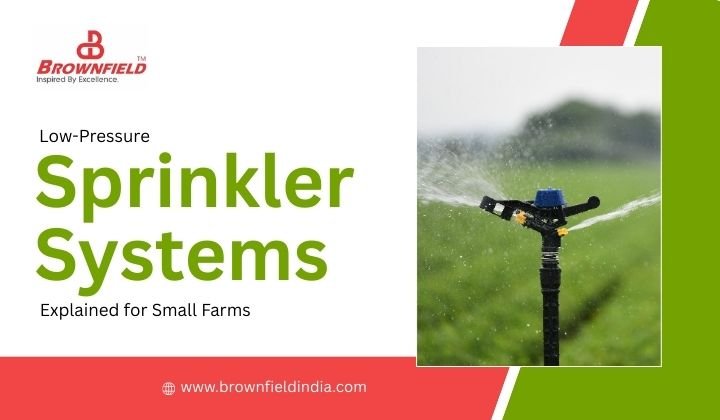
In 2024, a 5-acre vegetable farmer in Madhya Pradesh struggled with high energy costs from his conventional high-pressure irrigation system. Monthly electricity bills for pumping were excessive, and frequent pump maintenance added to operational expenses.
After consulting with sprinkler irrigation suppliers Indore, the farmer retrofitted his system with low-pressure sprinkler heads operating at reduced PSI instead of the previous high-pressure requirement. The installation included pressure regulators, specialized nozzles, and redesigned lateral spacing.
Within one growing season, the transformation was remarkable. Electricity costs dropped significantly, pump maintenance decreased substantially, and water distribution uniformity actually improved. The water-efficient irrigation system delivered the same crop yields while consuming considerably less energy and water. This case demonstrates how low-pressure sprinkler irrigation saves water while dramatically reducing operational costs for small farms.
What Is a Low-Pressure Sprinkler System for Small Farms?
A low-pressure sprinkler system is an agricultural sprinkler irrigation system designed to operate effectively at reduced PSI (pounds per square inch) compared to conventional systems requiring higher pressures. These systems use specialized components engineered for efficient water distribution at reduced pressures.
The technology relies on precision-engineered nozzles, optimized spacing patterns, and pressure regulation devices that maintain uniform water distribution system performance despite lower operating pressures. This approach dramatically reduces energy consumption for pumping while maintaining or even improving irrigation effectiveness.
Low PSI irrigation setup solutions have revolutionized irrigation possibilities for small farmers. Operations with limited water pressure, smaller pumps, or high energy costs can now implement professional sprinkler irrigation previously considered economically unfeasible.
How Low-Pressure Sprinkler Irrigation Works
How sprinkler irrigation works at low pressures involves specialized components that atomize water into fine droplets using less energy. Low-pressure nozzles incorporate internal flow paths and geometric designs that create effective spray patterns without requiring high inlet pressures.
The physics behind these systems utilizes larger orifice openings with optimized internal geometries. Traditional high-pressure nozzles force water through small openings creating pressure drop and spray formation. Low pressure water sprinklers for farms achieve similar results through engineered flow paths requiring less force.
Pressure regulators installed on each sprinkler head or lateral line maintain consistent operating pressure regardless of elevation changes or distance from the pump. This regulation ensures uniform water distribution system performance across entire field areas.
Advantages of Low-Pressure Sprinkler Systems
1. Energy Savings and Cost Reduction
The primary benefit of energy efficient sprinkler system operation is substantially reduced pumping energy requirements. Pump power requirements increase exponentially with pressure, so reducing operating pressure dramatically cuts energy consumption.
For small farms, these energy savings translate directly to improved profitability. Monthly electricity or fuel costs decrease dramatically, often paying back system investment within a few growing seasons through operational savings alone.
Energy-saving irrigation methods benefit compounds over time. As energy costs rise, the economic advantage of low-pressure systems becomes increasingly significant for long-term farm sustainability.
2. Reduced Infrastructure Requirements
Low PSI sprinkler irrigation enables use of smaller, less expensive pumps compared to high-pressure alternatives. A lower-horsepower pump might adequately serve an area requiring higher capacity for conventional sprinklers.
Piping systems also benefit from reduced pressure requirements. Lower operating pressures allow use of lighter-weight, less expensive pipe materials without sacrificing safety margins. This flexibility reduces total system installation costs significantly.
3. Improved Water Application Efficiency
Water-efficient irrigation systems India achieve superior performance through low-pressure technology. Reduced operating pressures create larger water droplets that resist wind drift better than fine mists from high-pressure systems.
These larger droplets reach intended targets more reliably, improving application uniformity and reducing water waste from evaporation.
4. Gentler on Crops and Soil
Lower impact energy from larger droplets reduces soil compaction, erosion, and physical crop damage. Delicate crops like lettuce, strawberries, and young transplants particularly benefit from gentler water application.
The reduced droplet velocity prevents soil surface sealing that can occur with high-pressure systems. Improved infiltration maintains soil structure and reduces runoff even on sloped terrain.
Types of Low-Pressure Sprinkler Systems for Small Farms
1. Portable Low-Pressure Systems
Portable sprinkler irrigation system designs offer maximum flexibility for small farms. Lightweight aluminum or plastic pipes can be moved between fields or positions, allowing efficient coverage of diverse crop areas with limited equipment investment.
These systems typically use quick-connect fittings enabling one or two people to assemble, operate, and relocate components. The portability proves valuable for crop rotation, diverse plantings, or rental land situations.
2. Semi-Permanent Installations
Small farm irrigation solutions often employ semi-permanent designs with buried mainlines and removable lateral pipes. This approach balances installation cost against operational convenience and system longevity.
Mainlines remain buried year-round while lateral lines with sprinkler heads are installed seasonally. This configuration protects major infrastructure while maintaining flexibility for changing crop patterns.
3. Permanent Fixed Systems
For established operations with consistent crop patterns, permanent installations provide maximum convenience. All pipes remain installed with automatic sprinkler systems for farms controlled by timers or smart controllers.
These systems offer labor savings through automation but require higher initial investment and commit field areas to specific configurations. They work best for perennial crops, established vegetable beds, or permanent pasture irrigation.
Essential Components of Low-Pressure Sprinkler Systems
1. Specialized Sprinkler Heads
Sprinkler nozzle types for low-pressure applications include impact sprinklers with internal flow paths optimized for reduced-pressure operation, rotary nozzles creating rotating streams at low pressures, and spray heads with optimized orifice geometries.
Quality low-pressure heads maintain consistent coverage patterns across their operating range. Inferior products may produce irregular patterns or excessive drift when operated at minimum pressures.
2. Pressure Regulators
Pressure regulation ensures consistent performance across variable terrain and system configurations. Sprinkler irrigation system components for low-pressure operation typically include inline regulators or individual head regulators maintaining consistent output pressure.
These devices compensate for elevation differences, friction losses in pipes, and pump pressure variations. The result is uniform application across entire irrigated areas regardless of topography or distance from water source.
3. Appropriate Pumping Equipment
Sprinkler pump requirements for low-pressure systems consider total flow capacity more than maximum pressure. A pump delivering adequate pressure at required flow rates serves low-pressure systems effectively.
Centrifugal pumps, submersible pumps, or positive displacement pumps all work when properly sized. The key is matching pump output curves to actual system requirements rather than over-specifying pressure capacity.
4. Filtration and Water Quality Management
Low-pressure nozzles with larger orifices tolerate particulate matter better than high-pressure alternatives. However, proper filtration still prevents clogging and maintains long-term performance.
Screen filters rated for irrigation applications protect nozzles from debris. Periodic cleaning maintains flow rates and system efficiency throughout the growing season.
Designing an Effective Low-Pressure Sprinkler Layout
1. Spacing and Coverage Calculations
Sprinkler irrigation layout design for low-pressure systems requires careful spacing calculations. Most low-pressure sprinklers operate effectively with appropriate spacing depending on specific head models and operating pressure.
Overlap between adjacent sprinkler coverage areas ensures uniform application. Industry standards recommend adequate overlap for consistent distribution even with wind conditions.
2. Hydraulic Calculations
System design must account for friction losses in pipes, elevation changes, and simultaneous sprinkler operation. Online calculators and design software help determine appropriate pipe sizes and pump requirements for specific layouts.
3. Zone Division Strategy
Best low-pressure sprinkler systems for small farmers designs often divide larger areas into multiple zones. Each zone operates independently, reducing simultaneous water demand and allowing smaller pump and pipe sizing.
Zone division also enables customized irrigation schedules for different crops or field sections. This flexibility optimizes water use while simplifying system control and operation.
Installation Considerations for Small Farms
Proper installation ensures optimal low-pressure sprinkler system performance and longevity. Begin with accurate field measurements and terrain mapping to guide component placement and pipe routing.
Trench depths for buried lines should account for frost protection and protection from tillage equipment. Most regions require adequate minimum depths for year-round installations.
Pipe slope and low-point drains enable complete system drainage for winterization. Trapped water can freeze and damage components in cold climates, making proper drainage critical.
Cost Analysis for Low-Pressure Sprinkler Irrigation
What is the cost of low-pressure sprinkler irrigation per acre varies based on system complexity, components, and installation method. Basic portable systems offer more affordable options, while permanent installations represent higher investment levels.
Key cost factors include sprinkler heads, piping materials, pump and power equipment, controls and automation systems, and installation labor. Professional installation ensures proper design and implementation.
Return on investment typically occurs within a few growing seasons through combined energy savings, increased yields, and reduced labor costs. The economic benefits continue accumulating throughout the system’s operational life.
Low-Pressure vs High-Pressure Sprinkler Systems Comparison
Low-pressure vs high-pressure sprinkler system: which is better depends on specific farm conditions. Low-pressure systems excel for small farms with limited power availability, high energy costs, gentle crop requirements, and terrain with minimal elevation changes.
High-pressure systems work better for very windy locations, large-scale operations amortizing high pump costs, situations requiring long throw distances, and farms with abundant low-cost energy.
For most small farms under moderate acreage, low-pressure systems provide superior economics and adequate performance for diverse crop types.
Maintenance and Troubleshooting
What causes low pressure in sprinkler systems includes clogged nozzles, leaking pipes or fittings, inadequate pump capacity, partially closed valves, and excessive friction from undersized pipes.
Regular maintenance prevents most problems. Seasonal inspections should check for leaks, clean filters, test pressure regulators, inspect nozzles for wear or damage, and verify proper pump operation.
Simple troubleshooting resolves common issues. Uneven coverage often indicates clogged nozzles or pressure regulation problems. Low overall pressure suggests pump issues or major leaks requiring immediate attention.
FAQ’s About Low-Pressure Sprinkler Systems
1. What is a low-pressure sprinkler?
A low-pressure sprinkler operates effectively at reduced PSI using specialized nozzles providing uniform water distribution system performance with reduced energy consumption.
2. What is the use of sprinklers in farming?
Agricultural sprinkler systems distribute water efficiently across crops, conserving water, reducing labor, enabling automation, and improving yields through uniform water distribution system coverage.
3. What are the 4 types of sprinkler systems?
Types of sprinkler irrigation systems include fixed permanent, portable/mobile, center pivot, and linear move configurations serving different farm sizes and applications.
4. How to lower pressure on a sprinkler system?
Install pressure regulators, use low-pressure nozzles, reduce pump speed, partially close the main valve, or install energy efficient sprinkler system components designed for operation.
5. What is the 3 times rule for sprinkler heads?
The 3 times rule states sprinkler head spacing should not exceed three times the wetted radius for adequate overlap and uniform water distribution.
6. What is a low pressure water system?
Low PSI irrigation setup operates at reduced pressure using specialized components providing efficient water delivery with reduced energy requirements for pumping.
7. What causes low pressure in sprinkler systems?
Clogged nozzles, pipe leaks, inadequate pump capacity, partially closed valves, undersized pipes, or excessive elevation changes cause low pressure water sprinklers for farms.
8. What is the most common cause of low water pressure?
Clogged filters and nozzles represent the most common cause, followed by pump problems and leaking pipes affecting water-efficient irrigation systems India performance.
9. What is a low water pressure range?
Low pressure sprinkler system range is typically at reduced PSI levels, compared to standard systems operating at higher pressure for conventional irrigation applications.
10. What is a low pressure area in rain?
A meteorological low-pressure area involves atmospheric conditions causing air to rise and cool, creating clouds and precipitation through condensation processes.
11. What are the three types of irrigation?
Three main modern irrigation techniques are surface irrigation (flood/furrow), sprinkler irrigation (overhead distribution), and drip irrigation (localized root zone delivery).
12. What is the minimum pressure for the sprinkler system?
Low PSI sprinkler irrigation minimum pressure varies by nozzle type, though some specialized energy efficient sprinkler system nozzles operate at very low pressures.
Conclusion
Low-pressure sprinkler systems provide small farms with energy-saving irrigation method benefits including reduced pumping costs, improved water efficiency, and gentler crop application. What is a low-pressure sprinkler system for small farms centers on specialized nozzles operating at reduced PSI delivering uniform water distribution system performance. These water-efficient irrigation systems India offer attractive payback through operational savings. Consult experienced sprinkler irrigation suppliers Indore to implement small farm irrigation solutions matching your specific crops and budget requirements.