
Modern agriculture is changing quickly. Farmers are now using advanced irrigation technologies to manage water more efficiently. Systems such as Sprinkler Irrigation System and drip irrigation help deliver water directly to crops while reducing waste.
Traditional irrigation methods often lead to water loss through evaporation and runoff. Because of this problem, many farmers are adopting Water-efficient irrigation systems in India to improve crop production and protect natural water resources.
The use of Micro irrigation technology is becoming common in vegetable farming, fruit cultivation, and commercial agriculture. These systems allow farmers to provide controlled water supply to plants while maintaining healthy soil moisture levels.
Farmers across many regions also combine drip irrigation with Automatic sprinkler systems for farms. This combination improves crop growth and ensures water is distributed evenly throughout the field.
Sprinkler Irrigation System for Modern Farming
The Sprinkler Irrigation System is widely used because it distributes water evenly across crops. The system sprays water over the field similar to natural rainfall.
Farmers in regions such as Agricultural sprinkler systems Madhya Pradesh often use sprinkler irrigation for crops that require uniform watering.
Important components of a sprinkler irrigation system include:
• Water pump
• Main pipeline
• Sprinkler heads
• Valves and connectors
• Pressure regulators
Benefits of sprinkler irrigation systems include:
• Even water distribution across crops
• Reduced water wastage
• Improved crop growth
• Better soil moisture balance
• Suitable for many crop types
Farmers searching for irrigation equipment often connect with Sprinkler irrigation suppliers Indore to understand system design and installation requirements.
According to the Food and Agriculture Organization, efficient irrigation systems improve agricultural productivity while protecting natural water resources.
Because of these advantages, sprinkler irrigation is widely considered an important tool for modern farming.
Drip Irrigation System in India for One Acre Farms
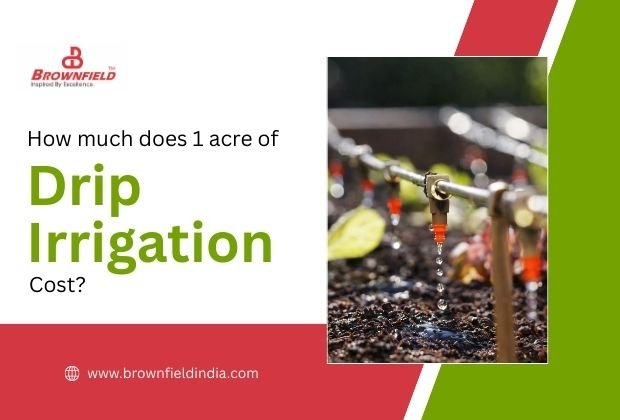
The Drip irrigation system in India is designed to deliver water directly to plant roots. Small emitters release water slowly, allowing crops to absorb moisture efficiently.
This method supports better Agricultural water management and reduces water waste compared to traditional irrigation.
The Drip irrigation installation process usually includes the following steps:
• Field layout planning
• Installation of main pipelines
• Placement of lateral drip pipes
• Filter and pressure control setup
• System testing and adjustments
Farmers often choose Drip irrigation for vegetable farming because vegetables require consistent moisture levels.
Benefits of drip irrigation include:
• Reduced water evaporation
• Healthy root development
• Less weed growth
• Improved fertilizer efficiency
• Better crop quality
Many farmers install drip irrigation alongside sprinkler systems for complete irrigation coverage.
Best Irrigation System for One Acre Farming
Choosing the right irrigation method depends on crop type, soil condition, and water availability. Some farms benefit from drip irrigation, while others use the Best sprinkler irrigation system Indore solutions.
Important factors when selecting irrigation systems include:
• Crop spacing and planting pattern
• Soil type and drainage capacity
• Availability of water sources
• Field slope and layout
• Irrigation maintenance needs
The Micro drip irrigation system is commonly used for crops such as:
• Tomato
• Capsicum
• Cucumber
• Watermelon
• Cotton
Meanwhile, Automatic sprinkler systems for farms work well for crops that require uniform watering across larger areas.
Using the correct irrigation method helps farmers maintain healthy plant growth and efficient water use.
Importance of Water Efficient Irrigation Systems
Water is one of the most valuable resources in agriculture. Farmers must use it carefully to maintain long term productivity.
Modern Water-efficient irrigation systems India help reduce water loss while supporting crop growth.
These systems support several Water-efficient irrigation methods that improve farm management.
Key benefits include:
• Improved water conservation
• Reduced irrigation waste
• Better crop growth
• Lower labor requirements
• Healthier soil structure
Farmers who adopt advanced irrigation technologies improve their ability to manage drought conditions and unpredictable rainfall.
Because of this, modern irrigation systems play an important role in sustainable farming practices.
FAQ’s About Sprinkler Irrigation System
1. What is the cost of drip irrigation per acre?
Drip irrigation systems depend on crop type, irrigation design, pipe length, soil condition, and installation requirements for effective agricultural water management.
2. What is the price of a drip set for 1 acre?
A drip irrigation set includes pipes, filters, emitters, connectors, and valves designed to supply controlled water directly to plant roots.
3. What is the 30/30 rule for drip irrigation?
The rule suggests watering crops for thirty minutes every thirty hours to maintain balanced soil moisture and healthy plant root growth.
4. How much drip pipe is required for 1 acre?
Drip pipe requirement depends on crop spacing, planting pattern, and field layout to ensure uniform water distribution across the entire farm.
5. What are the five advantages of drip irrigation?
Drip irrigation saves water, improves crop growth, reduces weeds, increases fertilizer efficiency, and supports better soil moisture control.
6. What is the 200 rule in drip irrigation?
The rule guides farmers to maintain proper emitter spacing and flow rate for uniform water distribution across the irrigation field.
7. Why is drip irrigation expensive?
Drip irrigation requires quality pipes, filters, valves, and proper installation which makes the system more complex than traditional irrigation methods.
8. How much water is required to irrigate one acre per day?
Water requirement depends on crop type, soil condition, climate, and irrigation system used for maintaining proper soil moisture levels.
9. How much money does drip irrigation save?
Drip irrigation helps farmers save water, reduce labor needs, improve fertilizer use efficiency, and increase overall crop productivity.
Conclusion
Efficient irrigation is essential for modern agriculture. Farmers must choose irrigation methods that provide enough water to crops while minimizing waste.
Both Sprinkler Irrigation System and drip irrigation offer practical solutions for water management. These systems distribute water evenly, support healthy crop growth, and improve agricultural productivity.
Drip irrigation works well for crops that require direct watering near the roots. Meanwhile, sprinkler irrigation provides wide coverage for larger crop areas.
Using modern irrigation technologies such as Micro irrigation technology helps farmers manage water more effectively and maintain soil moisture levels.
When farmers select the correct irrigation system based on crop type, soil conditions, and farm layout, they can improve crop yield and reduce water waste.
Adopting Water-efficient irrigation systems India is an important step toward sustainable agriculture and long term farming success.