
Transparent Mulch Film
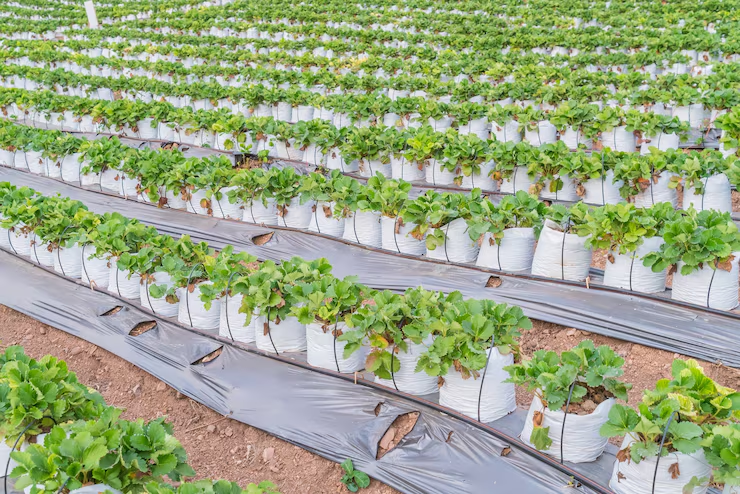
Transparent Mulch Film for Agriculture
Warm the Soil Faster, Germinate Earlier, and Grow Stronger Crops
Transparent mulch film for agriculture is a clear polyethylene film that allows sunlight to pass through and heat the soil beneath. Unlike black or colored films that block light, this film works by trapping solar energy, raising soil temperature, and creating a warm greenhouse-like environment at the root level. It is widely used for soil solarization, early-season planting, and speeding up seed germination in cooler months. Indian farmers use transparent plastic mulch film to eliminate soil-borne pathogens, stimulate early crop growth, and reduce the time from sowing to first harvest. It is a reliable, affordable, and proven solution for improving farm productivity across multiple crop types and growing seasons.
What Is a Transparent Mulch Film?
Transparent plastic mulch film is a thin, clear polyethylene sheet used in farming to cover the soil surface before or after planting. Unlike opaque films, it allows sunlight to pass through and be absorbed by the soil below. The trapped heat raises soil temperature, which is beneficial for germination, root growth, and soil health improvement.
This film is best known for its role in soil solarization, a process where moist soil is covered with transparent film during peak summer months to generate enough heat to kill weed seeds, harmful fungi, bacteria, and nematodes. It is also used during winter or early spring to warm cold soils and enable earlier planting than would otherwise be possible.
Who Is This Film Designed For?
- Farmers preparing fields before the main crop season using soil solarization
- Vegetable growers who want to start planting earlier in the season when soils are still cold
- Nursery operators growing seedlings that need warm, consistent soil temperatures for healthy germination
- Wheat and cereal crop farmers in north and central India using film mulching to protect early sown seeds
- Organic farmers looking to reduce soil-borne disease pressure without chemical fumigants
- Any farmer in India wanting faster germination, earlier harvest, and improved soil health before planting
Key Problems It Solves
- Slow or Uneven Germination: Cold soil slows down or prevents seed germination. Transparent mulch film traps solar heat and maintains the warm soil temperature needed for fast, uniform sprouting.
- Soil-Borne Pathogens and Pests: Nematodes, harmful fungi, and soil bacteria cause significant crop losses every season. UV stabilized transparent mulch film used in solarization raises soil temperature high enough to eliminate these threats naturally.
- Weed Seed Bank in Soil: Transparent film during solarization kills dormant weed seeds in the upper soil layers, reducing weed pressure for the following crop without herbicide use.
- Short Growing Windows in Cold Seasons: Farmers in cold regions lose weeks of potential growing time waiting for soil to warm up. This film shortens that gap and extends the effective growing season.
- High Input Costs for Soil Treatment: Chemical fumigation and nematicide treatments are expensive. Transparent film solarization achieves similar results at a fraction of the cost.
Key Benefits of Transparent Mulch Film
- Effective Soil Solarization
UV stabilized transparent mulch film for soil solarization is the most practical and affordable method available to Indian farmers for natural soil disinfestation. When laid over moist soil during summer months, the film traps solar radiation and raises soil temperature to 45 to 55 degrees Celsius in the top 15 to 20 centimeters. At these temperatures, most soil-borne pathogens, nematodes, and weed seeds are killed without any chemical inputs. Farmers report significant reductions in disease incidence in the following crop after even 3 to 6 weeks of solarization.
- Faster Seed Germination
Seeds germinate faster and more uniformly in warm soil. Transparent plastic mulch film for improved crop growth creates a consistently warm environment at the seed level, reducing germination time by several days compared to uncovered soil. This leads to more uniform crop stands, better field management, and earlier entry to market.
- Earlier Planting in Cold Seasons
Farmers in northern India often face cold winter soils that delay planting by several weeks. Laying transparent mulch film one to two weeks before sowing warms the soil to plantable temperatures faster, allowing earlier planting and an earlier first harvest. This is especially valuable for cash crops with tight seasonal windows.
- Soil Moisture Retention
Transparent mulch film for soil moisture retention in agriculture reduces evaporation from the soil surface, keeping the root zone moist between irrigation events. This is particularly beneficial during the germination and early seedling phase when consistent moisture is critical for healthy establishment. Farmers typically report meaningful reductions in early-stage irrigation needs.
- Improved Root Zone Environment
Warm, moist soil promotes better root development, improved nutrient uptake, and faster early vegetative growth. Crops planted in solarized and film-mulched soil consistently show stronger early growth, higher biomass at transplanting stage, and better overall canopy development compared to bare-soil plantings.
- Reduced Dependence on Chemical Soil Treatments
Transparent film solarization provides a chemical-free alternative to soil fumigants and nematicides. For farmers following organic protocols or trying to reduce chemical inputs, this is a practical and proven solution that delivers comparable results at significantly lower cost per acre.
- UV Stabilized for Full Application Life
Our UV stabilized transparent mulch film is manufactured with UV-resistant additives that prevent the film from yellowing, cracking, or losing clarity during extended outdoor exposure. This ensures the film retains its full heat-trapping performance across the entire solarization period or crop cycle, even during peak Indian summer conditions.
How to Use Transparent Mulch Film: Step-by-Step
- Prepare and Wet the Soil: Till and level the field. For solarization, irrigate the soil thoroughly before laying the film. Moist soil conducts and retains heat far more effectively than dry soil, which directly impacts solarization results.
- Lay the Film Flat: Unroll the transparent plastic mulch film across the prepared bed or field area. Keep the film taut and in close contact with the soil surface. Air gaps between the film and soil reduce heat transfer and weaken the solarization effect.
- Seal the Edges Firmly: Bury or pin all edges of the film at least 5 to 8 centimeters into the soil on all sides. A fully sealed perimeter prevents hot air from escaping and keeps the film in position during wind events.
- Leave the Film in Place: For solarization, keep the film on for 3 to 6 weeks during the hottest part of the year. For early-season warming before planting, leave it in place for 1 to 2 weeks until soil temperature reaches the desired level.
Product Features and Specifications
Feature | Details |
Material | Virgin polyethylene (LDPE / LLDPE) |
Color | Transparent / Clear |
Thickness | 20 micron to 50 micron (customizable) |
Width | 900mm, 1200mm, 1500mm (custom widths available) |
Roll Length | 400m to 1000m per roll |
UV Stabilization | Yes, UV stabilized for consistent field performance |
Light Transmission | High, allows sunlight to penetrate and warm the soil |
Heat Retention | Traps solar heat for soil solarization and early germination |
Tensile Strength | High, suitable for manual and mechanical laying |
Primary Use | Soil solarization, early season planting, germination support |
Suitable Crops | Wheat, vegetables, nursery crops, cold-season crops |
Packaging | Individually wrapped rolls, bulk pallet supply available |
Why Choose Us as Your Transparent Mulch Film Supplier in India
- Manufacturer-Direct Pricing: As transparent mulch film manufacturers and suppliers in India, we supply directly to farmers, dealers, and cooperatives without distributor markup, making bulk purchasing cost-effective for operations of any size.
- Consistent UV Stabilization Quality: Every roll is produced with verified UV-resistant additives and tested for clarity, tensile strength, and thickness uniformity before leaving our facility.
- Custom Specifications: We produce films in custom widths from 600mm to 2000mm, thicknesses from 20 to 50 micron, and roll lengths tailored to your field or bed dimensions.
- Pan-India Supply Network: We serve farmers, agri-input dealers, FPOs, and cooperatives across Rajasthan, Punjab, Haryana, Uttar Pradesh, Maharashtra, Gujarat, Madhya Pradesh, Karnataka, and Andhra Pradesh.
- Technical and Agronomic Guidance: Our team provides application guidance for both solarization programs and early-season planting, helping you get maximum benefit from every roll.
- Reliable Seasonal Availability: We maintain production-ready stock to ensure on-time delivery before the solarization window or planting season, so delays in supply never cost you a growing cycle.
Crops and Farming Sectors We Serve
- Field Vegetable Farming: Tomato, chilli, capsicum, brinjal, and cucurbits where pre-planting soil disinfestation improves crop health
- Wheat and Cereal Farming: Early sowing support in north India where soil warming accelerates germination and establishment
- Nursery and Seedling Production: Warm, consistent soil temperatures improve germination rates and seedling uniformity
- Strawberry Cultivation: Pre-season solarization combined with mulching improves fruit quality and reduces soil disease pressure
- Organic Farming: Chemical-free soil treatment through solarization aligns with organic and natural farming certification requirements
- Polyhouse Pre-Season Preparation: Solarizing polyhouse soil between crop cycles eliminates accumulated pathogens and weed seeds effectively
FAQ’s About Transparent Mulch Film
A: Transparent mulch film is used primarily for soil solarization, early-season soil warming, and supporting seed germination in cool conditions. It allows sunlight to pass through and heat the soil, which kills soil-borne pathogens, weed seeds, and harmful organisms while improving conditions for crop growth.
A: Soil solarization is a process of covering moist soil with UV stabilized transparent mulch film during peak summer months to trap solar heat. The soil temperature rises to 45 to 55 degrees Celsius in the top layers, which is enough to kill most soil-borne fungi, bacteria, nematodes, and dormant weed seeds naturally without chemicals.
A: For effective solarization, the film should be kept in place for 3 to 6 weeks during the hottest months of the year, typically May to July in most Indian regions. The exact duration depends on your location, starting soil condition, and target pathogens. Longer durations provide deeper and more thorough treatment.
A: Yes, for germination support and early-season soil warming, transparent mulch film is more effective because it allows sunlight to pass through and directly warm the soil. Black film absorbs heat but limits the degree of warming. For weed control, black film performs better, but for germination and solarization, transparent film is the right choice.
A: The best transparent mulch film for vegetable farming in India is a UV stabilized, 25 to 30 micron clear polyethylene film. It should offer high light transmission, good tensile strength for field conditions, and UV-resistant treatment to maintain clarity across the full application period.
A: Transparent film does not block weeds the way black film does. Because it allows light to pass through, it can actually stimulate shallow weed seed germination during the solarization period. However, the high soil temperatures generated during solarization subsequently kill those germinated seedlings along with dormant seeds, resulting in an overall reduction in weed pressure for the following crop.
A: Yes. UV stabilized transparent mulch film for soil solarization is specifically designed to withstand intense UV exposure during Indian summers without yellowing, cracking, or losing light transmission. The UV stabilization additives extend the film life and ensure consistent heat-trapping performance throughout the solarization period.
A: Transparent mulch film for soil moisture retention in agriculture creates a physical seal over the soil surface that prevents water from evaporating. When used alongside irrigation, it helps maintain consistent moisture in the root zone during the germination and early growth phases, reducing irrigation frequency and water cost
A: For soil solarization, 20 to 25 micron films work well in still conditions. For windy fields or longer application periods, 30 to 40 micron films are more durable and maintain soil contact better. For nursery beds or early-season planting, 25 micron is the most commonly used standard across India.
A: You can purchase directly from transparent mulch film manufacturers and suppliers in India for competitive factory pricing, assured quality, and bulk availability. Direct procurement eliminates middlemen and gives you access to customized specifications, technical support, and reliable supply for your planting or solarization season.
A: Yes. Transparent plastic mulch film used for solarization and soil warming involves no chemicals. It is a physical soil management tool that aligns with integrated and organic farming practices. Many certified organic farms use transparent film solarization as their primary pre-season soil health management method.
A: Transparent mulch film can sometimes be carefully removed and reused for a second solarization cycle if it has not been torn or punctured. However, repeated handling and UV exposure reduce its structural integrity. For best results in crop mulching applications, fresh film is recommended each season to ensure consistent performance.