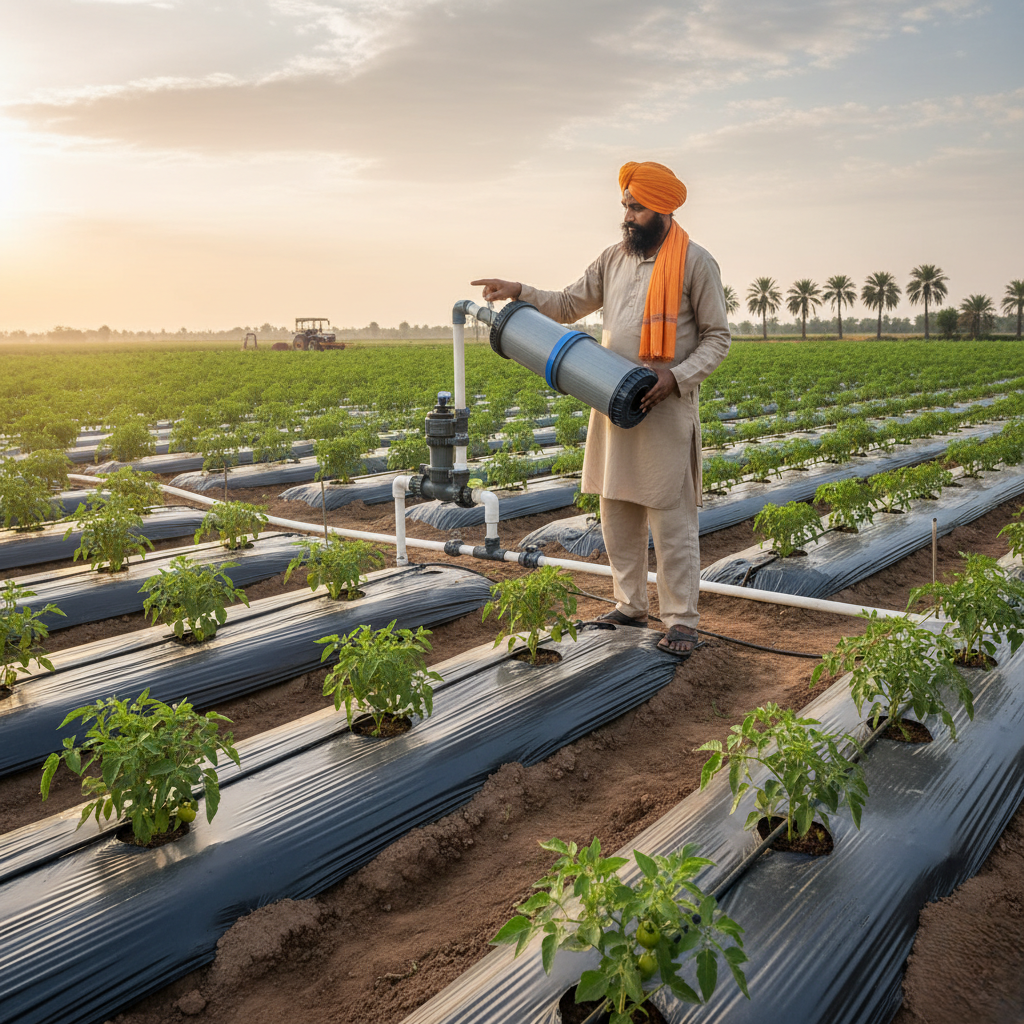
A well-functioning drip irrigation system ensures that every drop of water is used efficiently but what happens when dirt, sand, or organic matter clog the system? That’s where filters in drip irrigation systems play a crucial role.
For farmers and agri-business owners using drip irrigation in Indore, clean and filtered water ensures healthy crop growth and long-lasting irrigation equipment. we’ll explore the types and uses of filters in drip irrigation systems, their importance, and how choosing the right filter can make your irrigation more efficient and cost-effective.
Whether you are a farmer or looking for a reliable drip irrigation supplier in Indore, understanding how filters work can save you time, money, and effort.
Why Filters Are Essential in Drip Irrigation Systems
Filters are the heart of any drip irrigation system. They prevent clogging in emitters and drippers, which can occur due to impurities in water such as sand, silt, algae, or organic matter.
Key Benefits of Using Filters in Drip Irrigation Systems
- Improved Water Quality: Removes physical impurities that can damage the system.
- Longer Equipment Life: Protects emitters, pipes, and valves from blockage or wear.
- Consistent Water Flow: Ensures uniform water distribution across all plants.
- Reduced Maintenance Cost: Less frequent cleaning and fewer repairs.
- Better Crop Yield: Healthy roots receive consistent moisture without interruption.
In short, filters in drip irrigation systems are essential to maintain uniform irrigation, especially in regions like Indore, where water sources can vary in quality.
Types of Filters in Drip Irrigation Systems
Choosing the right filter type depends on the water source whether it’s from a well, canal, or reservoir. Each filter serves a specific purpose and level of filtration. Let’s look at the most commonly used filters in drip irrigation systems.
1. Screen Filters
Screen filters are the most basic and widely used type of filters in drip irrigation systems. They use a fine mesh screen to trap debris and sand particles.
Best For:
- Water from wells or municipal supplies with minimal organic matter.
- Farms that need primary filtration for small and medium-scale irrigation setups.
Advantages:
- Easy to clean and maintain.
- Cost-effective option.
- Compact design suitable for smaller farms.
Regularly backwash or clean the screen to avoid clogging and ensure smooth water flow.
2. Disc Filters
Disc filters are a step ahead of screen filters. They consist of a stack of grooved discs that trap impurities as water passes through.
Best For:
- Water sources containing organic materials or fine silt.
- Larger farms with medium to high filtration needs.
Advantages:
- Excellent filtration quality due to depth filtration.
- Long-lasting and durable design.
- Easy to clean through backwashing.
Farmers using drip irrigation in Indore prefer disc filters for their reliability in dealing with mixed water sources, especially where water contains algae or organic waste.
3. Sand (Media) Filters
Sand filters, also known as media filters, are used when the water source contains high levels of organic matter such as algae or suspended solids.
Best For:
- Canal or river water with high impurity content.
- Large agricultural setups and commercial farms.
Advantages:
- Effective for removing organic impurities and fine particles.
- Ideal for pre-filtration before using screen or disc filters.
- Low maintenance when installed with an automatic backwash system.
For efficient performance, combine a sand filter with a screen or disc filter in your drip irrigation system. This combination provides multi-layered protection for your emitters.
4. Hydrocyclone (Centrifugal) Filters
Hydrocyclone filters are designed to remove heavy sand and gravel particles from irrigation water. They use centrifugal force to separate particles based on weight.
Best For:
- Groundwater or borewell water containing sand.
- Pre-filtration before secondary filters like screen or disc filters.
Advantages:
- No moving parts minimal maintenance.
- Extends life of downstream filters.
- Highly efficient for sand removal.
Many drip irrigation suppliers in Indore, including Brownfield India, recommend hydrocyclone filters for borewell water systems to protect emitters from abrasion.
How to Choose the Right Filter for Your Drip Irrigation System
Selecting the right filter ensures your drip irrigation system works efficiently and lasts longer. Here are key factors to consider:
1. Water Source Quality
- Well or borewell: Use screen or hydrocyclone filters.
- Canal or pond: Use sand and disc filters for removing organic matter.
2. Flow Rate and System Size
Choose filters based on your system’s total water flow. Oversized or undersized filters can reduce efficiency.
3. Maintenance Requirements
If your farm doesn’t have regular maintenance staff, opt for automatic backwashing filters to save time.
4. Cost vs. Durability
While basic filters are cheaper, investing in a quality filter system reduces long-term maintenance costs.
Installation and Maintenance Tips for Filters in Drip Irrigation Systems
Even the best filters require regular care for consistent performance.
Installation Tips
- Always install filters at the water source before mainlines.
- Use pressure gauges to monitor filter performance.
- Follow manufacturer’s flow rate recommendations.
Maintenance Tips
- Clean screen or disc filters weekly, especially during the initial irrigation phase.
- Backwash sand filters regularly to prevent clogging.
- Check for leaks or pressure drops in your system.
- Replace damaged filter elements promptly.
Proper maintenance of filters in drip irrigation systems ensures long-term water efficiency and healthy crops a key reason why Brownfield India is trusted by farmers for reliable drip irrigation systems in Indore.
Advantages of Using Brownfield India Filters in Drip Irrigation Systems
When it comes to drip irrigation in Indore, Brownfield India stands out as a trusted name offering advanced, durable, and easy-to-maintain filter systems.
Why Choose Brownfield India?
- Certified Drip Irrigation Supplier in Indore.
- Wide range of filters – screen, disc, sand, and hydrocyclone.
- Expert installation and maintenance support.
- Affordable pricing with long-term warranties.
- Proven results for farmers across Madhya Pradesh.
With Brownfield India’s filters in drip irrigation systems, you can improve water efficiency, reduce clogging, and ensure your crops get uniform irrigation all year round.
FAQs About Filters in Drip Irrigation Systems
Q1. How often should I clean my filter?
It depends on water quality and usage, but generally once every 7–10 days.
Q2. Can I use multiple filters together?
Yes, combining hydrocyclone, sand, and disc filters ensures comprehensive filtration.
Q3. What is the lifespan of drip filters?
High-quality filters from Brownfield India can last 5–7 years with regular maintenance.
Q4. Are filters necessary for small drip systems?
Absolutely. Even small-scale setups need filters to prevent clogging and improve performance.
Conclusion
Filters in drip irrigation systems are vital for ensuring water purity, maintaining consistent flow, and enhancing crop productivity. Whether you use well water or canal water, the right combination of filters can protect your equipment and ensure better yields.
If you’re looking for a trusted drip irrigation supplier in Indore, contact Brownfield India your partner in modern and sustainable irrigation solutions.