
Biodegradable Mulch Film
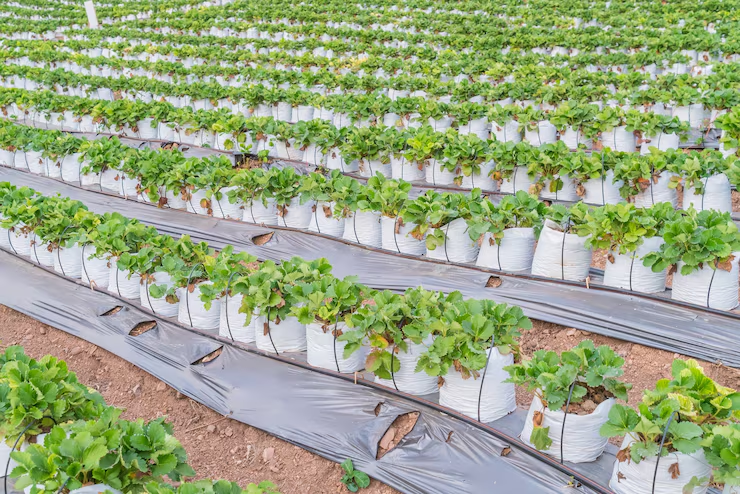
Biodegradable Mulch Film for Agriculture
Farm Better Today. Leave No Plastic Behind for Tomorrow.
Biodegradable mulch film is transforming the way Indian farmers approach sustainable crop production. Unlike conventional plastic films that must be manually removed and disposed of after the harvest, this eco-friendly film breaks down naturally in the soil through the action of heat, moisture, and microbial activity. It delivers the same proven agronomic benefits as traditional mulch film, including weed suppression, soil moisture retention, and soil temperature regulation, while completely eliminating the problem of plastic waste accumulation in farm fields. For farmers who want to improve their yields today without compromising their soil health for future seasons, biodegradable mulch film is the right step forward.
What Is Biodegradable Mulch Film?
Biodegradable plastic mulch film for agriculture is made from bio-based or compostable polymers such as PLA (polylactic acid), PBAT, or starch blends. These materials are designed to break down in the soil after a defined period, typically 90 to 180 days, depending on the crop cycle, soil temperature, and moisture conditions.
The film functions exactly like conventional polyethylene mulch during the active growing season. It covers the soil, blocks weeds, retains moisture, and regulates temperature. Once the crop is complete and conditions are right, soil microorganisms begin breaking the film down into water, carbon dioxide, and organic matter. No removal, no plastic waste, and no soil contamination.
Who Is This Film Designed For?
- Organic farmers and natural farming practitioners who cannot use conventional plastic inputs
- Vegetable and fruit growers who want to reduce the labor and cost of plastic film removal after harvest
- Export-oriented farms supplying markets that require verified sustainable farming practices
- Farmers in regions where plastic film disposal is difficult, expensive, or environmentally restricted
- Progressive farmers and agri-entrepreneurs who want to future-proof their operations against tightening plastic use regulations in India
- FPOs and cooperative farms working under sustainability or CSR-linked agriculture programs
Key Problems It Solves
- Post-Harvest Plastic Removal Cost: Removing and disposing of conventional plastic film after every crop cycle takes significant labor and expense. Biodegradable film eliminates this step entirely by breaking down in the soil after harvest.
- Plastic Accumulation in Farmland: Years of conventional plastic mulching leave behind film fragments that degrade slowly and affect soil structure. Eco-friendly biodegradable mulch film leaves no toxic residue and no microplastic contamination.
- Weed Pressure Without Herbicides: Biodegradable plastic mulch film for weed control in agriculture provides full weed suppression during the active growing season, reducing herbicide dependency without any compromise on control.
- Soil Moisture Loss: The film retains soil moisture as effectively as conventional plastic, reducing irrigation frequency and protecting crops during dry spells.
- Sustainability Compliance Pressure: Farmers supplying to organized retail, export buyers, or contract farming arrangements increasingly face requirements for documented sustainable practices. This film helps meet those requirements.
Key Benefits of Biodegradable Mulch Film
- No Film Removal after Harvest
The most immediate practical benefit of organic biodegradable mulch film is that it does not need to be removed from the field after the crop cycle ends. The film begins degrading in the soil at the right time, driven by microbial activity, moisture, and heat. This saves 2 to 4 labor days per acre that conventional film removal typically requires, directly reducing your per-crop operational cost.
- Effective Weed Suppression throughout the Crop Cycle
Biodegradable mulch film for soil moisture retention and crop protection provides complete weed blockage during the active growing season. The black variant blocks all light from reaching the soil beneath, preventing weed germination just as effectively as conventional black plastic. The film maintains its integrity throughout the crop cycle before degradation begins after harvest.
- Consistent Soil Moisture Retention
The film creates a sealed barrier over the soil surface that reduces water evaporation between irrigation cycles. Farmers using biodegradable mulch film for soil moisture retention and crop protection typically achieve 25 to 40 percent water savings per crop cycle, depending on the crop type, soil texture, and local climate conditions.
- Improved Soil Health Over Time
When the film breaks down, it adds organic matter to the soil. Over multiple seasons, this contributes to improved soil microbial activity, better soil structure, and enhanced nutrient cycling. Unlike conventional plastic, which degrades into harmful micro plastic particles, biodegradable film leaves behind only beneficial organic residues.
- Supports Organic and Sustainable Certification
Eco-friendly biodegradable mulch film for vegetable cultivation is accepted in certified organic farming systems where petroleum-based plastic films are restricted or prohibited. For farmers pursuing organic certification or supplying to buyers who require verified green practices, this film helps satisfy both agronomic and compliance requirements simultaneously.
- Identical Agronomic Performance to Conventional Film
Best biodegradable mulch film for sustainable farming in India performs the same functions as conventional polyethylene during the active crop period. Temperature regulation, moisture retention, weeds control, and soil protection all function at comparable levels. Farmers do not have to sacrifice crop performance to choose a sustainable option.
- Contributes to Long-Term Farm Sustainability
Repeated use of conventional plastic mulch degrades soil over time through physical disruption and chemical contamination. Switching to biodegradable film is an investment in the long-term productivity and environmental quality of your farmland. It protects soil biology, reduces plastic waste, and positions your farm for compliance with India’s evolving plastic use regulations.
How to Use Biodegradable Mulch Film: Step-by-Step
- Prepare the Crop Bed: Till, level, and fertilize the soil as you would for any mulch film application. Install drip irrigation lines if required before laying the film. A firm, well-prepared bed ensures full soil contact and proper film performance.
- Lay the Film with Care: Unroll the biodegradable film gently along the prepared bed. Handle it with slightly more care than conventional plastic film, as biodegradable materials can be more sensitive to sharp edges or rough surfaces during installation.
- Secure the Edges Firmly: Bury or pin the film edges 5 to 8 centimeters into the soil on both sides. Proper edge anchoring prevents wind uplift and maintains soil contact for effective weed suppression and moisture retention throughout the season.
- Punch Planting Holes and Plant: Create holes at the required plant spacing using a manual or mechanical punch. Transplant seedlings or direct sow seeds through the holes. The film begins delivering all its agronomic benefits from day one.
- Leave in Place After Harvest: After crop completion, simply till or incorporate the film into the soil. Soil microbes, moisture, and heat will degrade the film over the following weeks to months. No collection, no transportation, and no disposal required.
Product Features and Specifications
Feature | Details |
Material | PLA (Polylactic Acid), PBAT, or starch-blend biopolymers |
Color | Black (standard), also available in other shades |
Thickness | 15 micron to 25 micron (standard biodegradable grades) |
Width | 900mm, 1200mm, 1500mm (custom widths available) |
Roll Length | 400m to 800m per roll |
Degradation Period | 90 to 180 days depending on soil temperature and moisture |
Degradation Byproducts | Water, CO2, and organic biomass. No toxic residue. |
Weed Suppression | Full light blockage on black variant for weed control |
Moisture Retention | Yes, reduces evaporation throughout the crop cycle |
Certifications | Available in BIS, EN 13432, and ASTM D6400 compliant grades |
Suitable Crops | Vegetables, fruits, organic crops, export-quality produce |
Packaging | Individually wrapped rolls, bulk pallet supply available |
Why Choose Us as Your Biodegradable Mulch Film Supplier in India
- Certified Biodegradable Materials: We supply films manufactured from verified compostable polymers compliant with international standards including EN 13432 and ASTM D6400, ensuring genuine biodegradability and not just marketing claims.
- Manufacturer-Direct Supply: As biodegradable mulch film manufacturers and suppliers in India, we offer factory pricing with no distributor markup, making sustainable farming more affordable for farmers at every scale.
- Agronomic Guidance Included: Our team helps you select the right degradation timeline, thickness, and width for your specific crop, region, and soil type so you get full-season performance without premature breakdown.
- Custom Specifications Available: We produce biodegradable film in custom widths, thicknesses, and degradation timelines to match your crop cycle and bed dimensions, whether you grow a 60-day vegetable or a 150-day fruit crop.
- Pan-India Supply Network: We supply to organic farms, agri-dealers, FPOs, and cooperatives across Maharashtra, Gujarat, Karnataka, Andhra Pradesh, Tamil Nadu, Rajasthan, Madhya Pradesh, and Punjab.
- Transparent Product Information: We clearly communicate degradation timelines, material composition, and certification status for every product grade, so you can make informed procurement decisions with full confidence.
Crops and Farming Sectors We Serve
- Certified Organic Vegetable Farming: Tomato, capsicum, chilli, cucumber, brinjal, and leafy greens where conventional plastic is restricted or buyer-prohibited
- Export Horticulture: High-value produce farms supplying to European, Middle Eastern, and Southeast Asian markets with documented sustainability requirements
- Strawberry and Soft Fruit Cultivation: Where film must remain in the soil post-harvest without contaminating the growing environment
- Contract Farming Programs: Farms operating under corporate or cooperative contracts that include sustainability or zero-plastic-waste clauses
- Natural and Regenerative Farming: Operations focused on building long-term soil health and reducing external chemical and plastic inputs
FAQ’s About Biodegradable Mulch Film
A: Biodegradable mulch film is made from bio-based or compostable polymers like PLA and PBAT instead of conventional polyethylene. It performs the same functions during the crop cycle but breaks down into water, carbon dioxide, and organic matter after harvest. Regular plastic film must be manually removed and disposed of, while biodegradable film degrades naturally in the soil.
A: Most biodegradable mulch films degrade within 90 to 180 days after the crop season, depending on soil temperature, moisture levels, and microbial activity. Films used in warmer, humid conditions break down faster than those in dry or cool soils. Degradation timelines can be matched to your crop cycle duration when ordering.
A: Yes. Biodegradable plastic mulch film for weed control in agriculture provides the same level of weed suppression as conventional black plastic during the active crop period. The film maintains its integrity throughout the growing season before beginning to break down after the crop is complete.
A: Yes. Eco-friendly biodegradable mulch film made from certified compostable materials is generally accepted in organic farming systems. However, certification requirements vary by certifying body. Always verify with your specific organic certifier before use, and request material certification documents from your supplier to support the approval process.
A: A well-manufactured biodegradable film is engineered to remain stable throughout the intended crop cycle duration before degradation begins. Degradation accelerates primarily after the crop when soil conditions change. Selecting the right film grade matched to your crop duration and region prevents premature breakdown during the growing season.
A: Biodegradable mulch films are typically made from PLA (polylactic acid derived from corn starch), PBAT (a synthetic biodegradable polymer), or blends of starch with other compostable compounds. These materials are designed to be broken down by soil microorganisms into harmless organic byproducts with no toxic residue.
A: Yes. Biodegradable mulch film for soil moisture retention and crop protection works the same way as conventional plastic by covering the soil surface and reducing evaporation. Farmers typically report 25 to 40 percent reductions in irrigation water use when using mulch film, whether biodegradable or conventional.
A: The best biodegradable mulch film for sustainable farming in India is one that matches your crop cycle duration, comes with verified biodegradability certification, and is sourced from a reliable manufacturer. Look for films compliant with EN 13432 or ASTM D6400 standards and specify your crop duration when placing orders to get the right degradation timeline.
A: Yes, biodegradable film currently costs more per roll than conventional polyethylene mulch. However, when you factor in the labor and disposal cost savings from not having to remove the film after harvest, the total cost difference narrows significantly. For farms with high labor costs or strict sustainability requirements, the total economics often favor biodegradable film.
A: You can purchase directly from biodegradable mulch film manufacturers and suppliers in India for the best pricing and product verification. Direct procurement gives you access to certified product documentation, custom specifications, and technical support to match the film to your farming system and crop requirements.
A: No. Certified biodegradable mulch film breaks down into water, carbon dioxide, and organic biomass. These byproducts are safe for soil microorganisms, plant roots, and the broader soil ecosystem. Over multiple seasons, the organic residues can contribute positively to soil organic matter and microbial diversity.
A: Yes. Biodegradable plastic mulch film is fully compatible with sub-surface drip irrigation. Lay your drip lines on the prepared bed before installing the film. Water is delivered to the root zone through the drip system while the film prevents surface evaporation, maximizing water use efficiency throughout the crop cycle.