
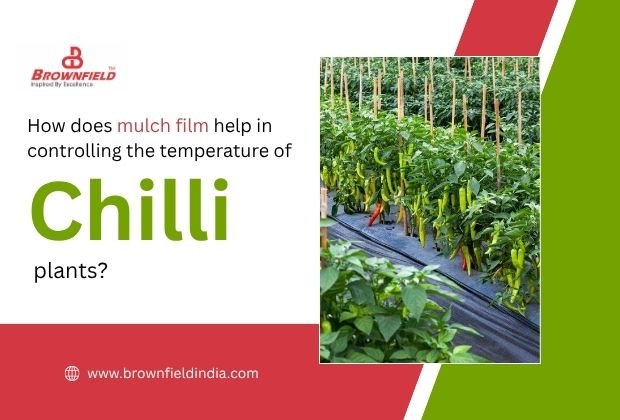
Chilli plants are warm-season crops that perform best when the root zone stays consistently warm and the soil surface remains stable between irrigation events. Temperature fluctuations at the soil level, especially during the early weeks after transplanting, cause stress that delays establishment, reduces flowering, and lowers the final fruit count per plant.
Mulch film for chilli cultivation provides a direct solution to this problem. The film sits on the soil surface and acts as a thermal regulator, slowing down heat loss at night and reducing extreme heat absorption during peak afternoon hours. This creates a more stable microclimate in the root zone.
Key facts about chilli farming in India that make temperature control critical:
- India is among the largest producers and exporters of chilli in the world, with major growing belts across Andhra Pradesh, Telangana, Karnataka, and Madhya Pradesh.
- Unmanaged soil temperature is one of the most common and least addressed causes of poor chilli establishment across Indian growing regions.
- Chilli roots operate within a narrow productive temperature band, and stress outside this range reduces both vegetative growth and fruit set.
- Agricultural mulch film adoption has grown steadily as farmers seek direct control over soil temperature and moisture variables.
- Early-season temperature stability in the root zone is the single factor most linked to faster canopy development and earlier first flowering.
How Soil Temperature Affects Chilli Plant Growth and Yield
Before understanding how mulch film for chilli helps, it is useful to understand what happens when soil temperature is poorly managed. Chilli roots are active in a relatively narrow temperature band. When soil becomes too cold, root activity slows and the plant cannot absorb water or nutrients effectively.
Soil temperature regulation is therefore not a comfort measure for chilli plants. It is a fundamental requirement for consistent productivity. Farmers who ignore this variable often find that their plants look healthy above ground but produce poorly because the root system is operating under persistent stress below the surface.
How unmanaged soil temperature damages chilli crop performance:
- Cold soil slows root nutrient absorption, causing visible deficiency symptoms even when fertilizer has been applied correctly to the bed.
- Overheated soil damages root cell membranes and triggers a plant stress response that halts vegetative growth and delays the start of flowering.
- Daily temperature swings between hot afternoons and cold nights create a stop-start growth cycle that extends the time to first harvest and reduces total fruit count.
- Waterlogged cold soil after irrigation creates ideal conditions for Pythium and Fusarium, the soil-borne pathogens most damaging to chilli root systems.
- Plants under persistent root zone stress allocate energy to survival rather than fruit production, which lowers yield even when canopy size appears normal.
The connection between root zone temperature and improved plant growth conditions is well established in agricultural research. When roots stay within their productive temperature range, plants allocate energy to vegetative growth, flower formation, and fruit development rather than stress response.
Black Mulch Film for Chilli: The Most Effective Temperature Control Option
Black plastic mulch film in Indore is the standard recommendation for chilli farmers who want to warm their soil and maintain that warmth through the growing season. The dark surface absorbs solar energy during daylight hours and releases it slowly back into the soil during the night.
The result is a root zone that stays warmer at night than uncovered soil, which is particularly valuable during the post-transplant establishment period when young chilli plants are most vulnerable to cold shock. Farmers using black mulch film in cooler growing regions such as the Madhya Pradesh highlands report noticeably faster canopy development in the first weeks after transplanting.
Why farmers across India choose black plastic mulch film for chilli:
- The opaque black surface absorbs solar radiation consistently across the full bed width, creating an even temperature profile in the root zone from row to row.
- Heat released slowly at night prevents the cold shock that commonly follows warm afternoons in hill stations and plateau chilli growing regions.
- The film eliminates light penetration to the soil surface, removing the conditions weeds need to germinate between and around chilli plants.
- Consistent film quality from verified mulch film suppliers in Indore ensures the thermal performance holds through repeated irrigation cycles without cracking or losing opacity.
- A stable, warm root zone supports the beneficial soil microbial populations that naturally compete with harmful pathogens, adding a biological layer of disease protection.
Five Ways Mulch Film Controls Temperature and Supports Chilli Growth
- Soil temperature regulation is the core function of black mulch film, which absorbs solar heat during the day and releases it gradually through the night, protecting chilli roots from cold stress.
- Moisture retention in soil is maintained by the film surface, which blocks evaporation and keeps the root zone consistently moist without requiring more frequent irrigation between cycles.
- Crop protection methods that use mulch film reduce the frequency of waterlogging at the stem base, which is a common cause of root rot and fungal disease in chilli during the monsoon season.
- Sustainable farming practices are supported because mulch film reduces water consumption, lowers fungicide use, and cuts manual weeding labor across the chilli growing season.
- Improved plant growth conditions result from a stable root zone that allows chilli plants to allocate energy to flowering and fruiting rather than recovering from temperature and moisture stress.
Mulch Film Type Comparison for Chilli Temperature Management
Different types of agricultural mulching solutions affect soil temperature in different ways. The right choice depends on your growing region, the season of planting, and whether heat retention or heat reflection is your primary need.
| Film Type | Temperature Effect | Weed Control | Moisture Retention | Best Season for Chilli |
| Black Plastic Mulch Film | Warms soil | Excellent | High | Cooler seasons, all regions |
| Silver Reflective Film | Cools soil slightly | Good | High | Hot summer planting |
| White Film | Minimal change | Moderate | Moderate | Warm season, mild climates |
| Biodegradable Film | Similar to black | Good | High | Organic chilli farms |
| Clear Film | Maximum warming | Poor | Moderate | Cold season soil prep only |
Points to consider when reading this comparison table:
- Black film is the safest all-season choice because it performs reliably across the widest range of Indian chilli growing climates and planting windows.
- Silver film becomes the better option when summer soil temperatures regularly reach levels that stress shallow chilli roots in hot, low-altitude districts.
- Biodegradable film matches black film performance during the season and removes the post-harvest plastic removal step, which saves labor cost per crop cycle.
- White film suits situations where moderate temperature stability is needed without the stronger heat absorption of black, typically in warm but not hot growing conditions.
- Clear film is used only for pre-season soil warming before transplanting, not as a permanent mulch during chilli crop development, due to its poor weed suppression.
This comparison helps farmers answer the practical question of how to maintain soil temperature for chilli plants using mulch based on their specific location and seasonal planting schedule.
Silver Reflective Film: Temperature Management for Hot Climate Chilli Farms
In regions where summer temperatures push soil heat to damaging levels, silver mulch film offers an alternative to black film. The reflective surface bounces incoming solar radiation upward rather than absorbing it, which keeps the soil surface cooler during peak afternoon heat.
Silver film also creates a light environment around the lower canopy that disorients thrips, aphids, and other insects that transmit chilli leaf curl virus and other systemic diseases. Managing insect pressure through plastic mulch in farming reduces virus incidence without additional pesticide applications.
Situations where silver reflective film outperforms black film for chilli:
- Summer planting in districts where afternoon soil temperatures regularly reach levels that cause heat stress to young chilli roots and transplants.
- Farms with a documented history of thrips or aphid pressure that spread chilli leaf curl virus and other systemic infections through the crop.
- Growing regions in Rajasthan, Gujarat, and the drier parts of Madhya Pradesh where solar intensity during the pre-monsoon period creates soil overheating risk.
- Operations that want to reduce insecticide spray frequency by using reflective film as a first line of pest management at the field level.
- Farms transitioning toward integrated pest management systems where physical barriers and reflective surfaces replace chemical interventions where possible.
Biodegradable Mulch Film in Indore: Sustainable Temperature Control for Chilli
Biodegradable mulch film performs the same soil temperature regulation function as conventional black plastic mulch film during the growing season. It absorbs and retains heat, blocks weeds, and maintains moisture in the chilli root zone. The key difference is what happens after the crop is finished.
Conventional plastic mulch film in Indore must be collected, rolled, and disposed of after harvest. Biodegradable mulch film breaks down through natural microbial activity in the soil over several months, eliminating the need for removal entirely.
Why chilli farmers are switching to biodegradable mulch film in Indore
- Post-harvest film removal is a significant labor cost on large chilli farms, and biodegradable film eliminates this step from the seasonal workflow entirely.
- Certified organic chilli producers may be restricted to biodegradable film under their certification standard, making it the only compliant mulching option available.
- Film decomposition adds organic matter back to the soil, which supports long-term soil health and microbial activity across multiple growing seasons.
- Buyers of premium and export-grade chilli increasingly prefer suppliers who can demonstrate reduced plastic use and sustainable input practices in their production records.
- The upfront cost difference between biodegradable mulch film and standard agricultural film in Indore narrows considerably when removal labor savings are calculated into the total season cost.
How Mulch Film Improves Chilli Yield Through Better Growing Conditions
The role of mulch film in improving chilli plant growth and yield extends well beyond temperature control. A chilli plant that experiences stable root zone conditions throughout the season flowers earlier, sets fruit more consistently, and maintains active fruiting over a longer harvest window.
Mulching techniques in farming that combine raised beds, drip irrigation, and mulch film create a growing system where the major stress variables are controlled simultaneously. Water is delivered directly to the root zone. Temperature is buffered by the film surface. Weeds are suppressed. Soil splash and pathogen movement are reduced.
How mulch film contributes to better chilli yield outcomes across the full season:
- Earlier flowering results from stable root zone temperature and consistent nutrient uptake, both of which are supported by a correctly installed mulch film system.
- Longer fruiting windows are possible because plants are not recovering from mid-season stress events caused by temperature swings or waterlogging.
- Reduced fungicide applications lower cost per crop cycle and reduce the risk of chemical residue in chilli destined for export or premium domestic markets.
- Cleaner fruit at harvest results from less soil splash onto developing pods, which lowers post-harvest rejection rates when chilli is graded for fresh or dried markets.
- Chilli crop management using mulch film supports soil health over multiple seasons by reducing tillage frequency and maintaining soil structure under the covered bed.
What to Check When Buying Mulch Film in Indore for Chilli Farms
Not all agricultural mulch in Indore meets the performance standards that chilli farmers need for effective temperature regulation. Before placing an order with any mulch film manufacturer in Indore, confirm the following:
- Film opacity: A fully opaque black mulch film in Indore blocks all light, preventing weed germination and ensuring consistent heat absorption across the entire bed surface.
- Micron thickness: Standard chilli season use requires a film in the range of twenty-five to thirty micron. Heavier gauges provide greater durability for longer seasons or multi-harvest operations.
- UV stabilization: A properly UV stabilized mulch film holds its structure under direct Indian sunlight for the full growing season without cracking, shrinking, or losing thermal performance.
- Width options: The film must match your bed width precisely to avoid gaps around the stem base that allow soil temperature fluctuation and pathogen entry.
- Supplier credentials: Source mulch film in Indore from manufacturers holding BIS or ISO certification for agricultural film production to confirm consistent quality standards.
Case Study
Venkat Reddy grows chilli on his farm in Guntur, Andhra Pradesh, one of India’s most established chilli-growing districts. For several seasons, his early-transplanted chilli suffered from slow establishment in the weeks following planting. Plants were alive but not actively growing, and flowering began later than expected. A fellow farmer recommended trying black plastic mulch film on raised beds with drip lines placed underneath. Venkat applied the film across his planting area before the next season. The difference in plant behavior in the first month was clear. Stems thickened faster, the canopy developed ahead of schedule, and flowering began earlier than in previous seasons. Venkat attributes the change directly to the more stable soil temperature that the agricultural mulch film created around the root zone during the critical early weeks of plant development.
What this case study shows about mulch film for chilli:
- Physical film application before transplanting, rather than after, gives the soil time to reach a stable temperature before young roots make contact with the growing medium.
- The combination of raised beds and drip irrigation with mulch film creates a system where temperature, moisture, and weed control work together rather than independently.
- Visible canopy development ahead of schedule is a reliable indicator that root zone conditions are consistently within the productive range for chilli growth.
- Earlier flowering directly translates into earlier first harvest, which improves market timing and reduces the risk of late-season weather disrupting the crop.
- A single season of improved establishment, as Venkat experienced, can shift a farmer’s entire approach to chilli planting and input selection for subsequent seasons.
FAQ’s About Mulch Film for Chilli
Q. How does mulch film control temperature in chilli plants?
Mulch film absorbs daytime heat and releases it at night, keeping chilli root zones warm and stable through temperature fluctuations.
Q. Which mulch film is best for chilli farming in India?
Black plastic mulch film is best for most Indian chilli farms. It warms soil, retains moisture, and suppresses weeds effectively.
Q. Does mulch film help chilli plants during cold nights?
Yes. Black mulch film retains daytime heat and releases it slowly at night, protecting chilli roots from cold stress damage.
Q. Can biodegradable mulch film regulate chilli soil temperature?
Yes. Biodegradable mulch film performs similarly to black plastic film for temperature regulation and breaks down naturally after harvest.
Q. How does mulch film improve chilli yield?
Stable soil temperature, better moisture retention, and reduced weed competition allow chilli plants to focus energy on flowering and fruiting.
Q. What is the best time to apply mulch film for chilli?
Apply mulch film before transplanting so soil temperature stabilizes before young chilli roots make contact with the growing medium.
Q. Where can I find mulch film suppliers in Indore for chilli farming?
Brownfield connects chilli farmers with certified mulch film suppliers in Indore offering UV-stabilized, correctly gauged agricultural film.
Q. Is silver mulch film good for chilli in hot climates?
Yes. Silver mulch film cools soil slightly and repels insect vectors that spread chilli leaf curl virus in hot regions.
Conclusion
Mulch film for chilli farming is one of the most direct and cost-effective tools available for managing soil temperature, protecting root health, and improving seasonal yield. Whether a farmer selects black plastic mulch film for its heat retention and weed suppression, silver film for hot climate pest management, or biodegradable mulch film in Indore for a sustainable post-harvest outcome, the core benefit of a stable, protected root zone remains consistent across all options.
Sourcing from established mulch film manufacturers in Indore and verified mulch film suppliers in Indore ensures the film performs as expected through the full chilli season. A well-chosen agricultural mulch film protects the investment made in seed, irrigation, and labor by giving chilli plants the stable growing environment they need from transplant to final harvest.