
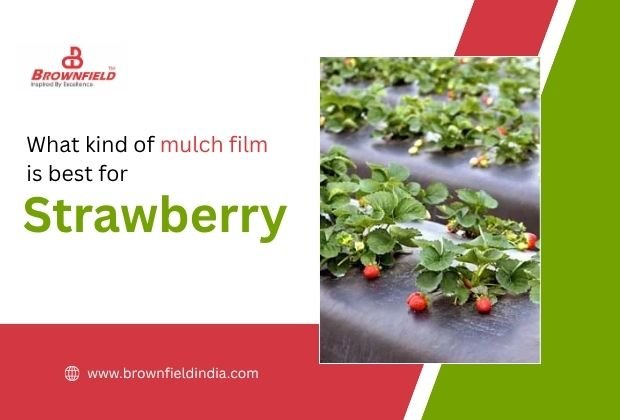
Strawberry plants need consistent soil warmth, clean fruit contact, and strong weed control to produce a healthy crop. Choosing the right mulch film for strawberry cultivation directly affects how well your plants grow, how clean your fruit stays, and how much labor your team spends managing the field. In India, where growing regions range from cool Mahabaleshwar to warm Gujarat plains, film selection is a decision with real financial consequences.
Studies on mulching in strawberry farming show that covered beds hold moisture far better than bare soil between irrigation cycles. This reduces how often farmers need to water and lowers the risk of stress-related yield loss during dry periods. For anyone working with agricultural mulch film in Indore or nearby regions of Madhya Pradesh, this single benefit alone justifies the investment.
India’s strawberry production has grown steadily across Maharashtra, Himachal Pradesh, and Uttarakhand. Farmers who have adopted plastic mulch for crops report cleaner berries, reduced fungal infections from soil contact, and longer shelf life in the market. These are outcomes that matter at every scale of farming.
Mulch Film Color Comparison: Choosing the Right Type for Your Farm
Different strawberry mulch film colors behave differently in the field. Soil temperature response, pest management, and weed suppression all vary depending on which film you select. The table below helps you make a faster, more informed decision.
| Film Type | Soil Effect | Weed Control | Best Season | Suited For |
| Black Mulch Film | Warms soil | Excellent | All seasons | Strawberry, vegetables |
| Silver Reflective Film | Cools soil slightly | Good | Warm seasons | Hot climate strawberry |
| White Film | Minimal change | Moderate | Warm seasons | Heat-sensitive crops |
| Biodegradable Film | Similar to black | Good | All seasons | Organic strawberry farms |
| Clear Film | Maximum warming | Poor | Cold season only | Early transplanting |
This overview helps farmers answer the common question of which color mulch film is best for strawberries based on their location and season rather than guesswork.
Black Mulch Film for Strawberry: Why Most Farmers Choose It
Black plastic mulch film in Indore and across India remains the top choice for strawberry cultivation. The opaque surface absorbs solar energy and transfers warmth to the root zone, which speeds up plant establishment and encourages consistent berry development throughout the season.
One of the strongest reasons farmers prefer black mulch film is its weed management performance. Weeds cannot germinate without light, and the solid black surface eliminates that possibility without any chemical input. This reduces labor costs and keeps the growing area clean between plant rows.
Fruit quality also improves significantly with black plastic mulch film. Strawberries that rest on the film surface stay dry, clean, and free from soil-borne fungal pathogens. Post-harvest rejection rates drop, and the shelf life of berries going to fresh markets or cold chain distribution improves noticeably.
Five Reasons Black Mulch Film Works for Strawberry Growers
- Soil temperature control keeps the root zone warm in cooler hill climates, promoting healthy early-season growth.
- Weed suppression methods using opaque film eliminate germination without herbicides, cutting field labor significantly.
- Moisture retention in soil is improved because the film surface reduces evaporation between irrigation events.
- Crop yield improvement techniques are supported by cleaner fruit contact, lower disease pressure, and better plant energy use.
- UV stabilized mulch film resists breakdown under direct Indian sunlight and reliably performs through a full growing season.
Silver Reflective Mulch Film: A Strong Option for Warm Climate Farms
Agricultural mulch films come in reflective silver as an alternative designed for warmer growing regions. Silver film bounces sunlight upward rather than absorbing it, which keeps the soil surface slightly cooler and creates a light environment that disorients flying insects such as aphids and whiteflies.
These insects are the primary carriers of mosaic virus in strawberry crops. Reducing their landing rate through reflective film is one of the most cost-effective weed suppression methods and pest management strategies available to growers without access to expensive pesticide programs.
For farmers in low-altitude plains asking black vs silver mulch film for strawberry crops, the answer often depends on summer temperatures. In regions where soil overheating is a genuine risk, silver film provides a buffer that protects root health and reduces transplant shock.
Biodegradable Mulch Film in Indore: Farming With the Future in Mind
Biodegradable mulch film in Indore has become a practical choice for strawberry growers pursuing organic certification or looking to reduce post-harvest plastic waste. These films are manufactured from plant-based polymers such as PLA or starch blends and behave like standard plastic mulch film in Indore during the crop cycle.
After harvest, biodegradable film breaks down naturally in the soil with moisture and microbial activity. This removes the need for film collection, transport, and disposal, which is a meaningful labor and logistics saving for small farm operations.
The cost per roll is higher than conventional agricultural film in Indore, but when total season costs are considered including removal labor and plastic disposal fees, the gap narrows considerably. For certified organic producers, biodegradable film may be the only compliant option available.
How to Choose Mulch Film for Strawberry Plants Based on Your Farm
Understanding how to choose mulch film for strawberry plants starts with three questions: Where is your farm located? What season are you planting? Are you farming conventionally or organically?
- Cool hill station farms should use black mulch film to warm the soil and extend the productive season.
- Hot plains farms benefit from silver reflective film to cool soil and manage flying insect pressure.
- Organic certified farms should select approved biodegradable mulch film to remain compliant.
- Commercial conventional farms will find black plastic mulch film in Indore the most cost-efficient option available.
- Early-season transplanting in cold conditions can use clear film for maximum soil warming before canopy establishment.
Always purchase from verified mulch film suppliers in Indore who can confirm micron thickness, UV stabilization rating, and width specifications for your bed layout.
What to Check Before Buying Agricultural Mulch Film in Indore
Not all agricultural mulch in Indore is produced to the same standard. Before placing a bulk order, confirm the following with your supplier:
- Micron thickness: Standard season use needs a film between twenty-five and thirty micron. Heavier gauges extend lifespan for multi-season use.
- UV stabilization: Any UV stabilized mulch film sold for field use should carry a confirmed seasonal rating appropriate to your region.
- Opacity: A truly opaque black mulch film in Indore blocks all light. Ask your supplier for a light transmission rating before purchase.
- Width and perforation: Pre-perforated film saves planting time. Confirm the hole spacing matches your strawberry transplant spacing.
- Certification: Source mulch film in Indore from manufacturers holding BIS or ISO certification for agricultural film production.
Case Study
Rajesh Patil runs a strawberry farm in Mahabaleshwar, Maharashtra. Before adopting black plastic mulch film, his team spent considerable time weeding and managing soil moisture manually. In one growing season, after laying film across his raised beds with drip irrigation underneath, the change was visible. Weed pressure dropped sharply. The soil between irrigation cycles stayed consistently moist. Berries resting on the film surface arrived at the market cleaner, with fewer rejections. Rajesh noted that the investment in agricultural mulch film paid back within that single season through saved labor and better fruit pricing.
FAQs About Mulch Film for Strawberry
Q. Which mulch film is best for strawberry plants?
Black mulch film for strawberries is best. It controls weeds, warms soil, and keeps fruit clean and market-ready.
Q. Is silver mulch film good for strawberries?
Yes. Silver film repels aphids and cools soil, making it ideal for warm-climate strawberry farms.
Q. What is biodegradable mulch film made from?
Biodegradable mulch film is made from plant-based polymers like PLA that break down naturally in soil after harvest.
Q. How long does plastic mulch film last in the field?
A UV stabilized mulch film lasts through one full growing season under standard Indian sunlight without cracking or shrinking.
Q. Where can I buy mulch film in Indore?
Brownfield connects farmers with trusted mulch film suppliers in Indore offering certified, UV-stabilized agricultural films at competitive rates.
Q. Does mulch film reduce water use in strawberry farming?
Yes. Mulch film reduces soil evaporation, which lowers irrigation frequency and total water consumption during the crop cycle.
Q. What thickness of mulch film is right for strawberries?
A thickness of twenty-five to thirty micron suits most strawberry farms. Heavier gauges suit multi-season or commercial-scale use.
Q. Can mulch film improve strawberry fruit quality?
Yes. Film keeps berries off soil contact, reducing fungal rot and soil contamination, which improves shelf life and market grade.
Conclusion
Selecting the right mulch film for strawberry farming is one of the highest-return decisions a grower can make before the season begins. Black plastic mulch film suits the widest range of conditions and remains the most trusted choice across Indian strawberry regions. Silver film serves warm-climate farms well, while biodegradable mulch film in Indore offers a clean solution for organic producers.
Buying from experienced mulch film manufacturers in Indore and verified mulch film suppliers in Indore protects your investment and ensures the film performs as expected through harvest. The right film means cleaner fruit, lower labor costs, and a stronger return at the end of every season.