
White Black Mulch Film
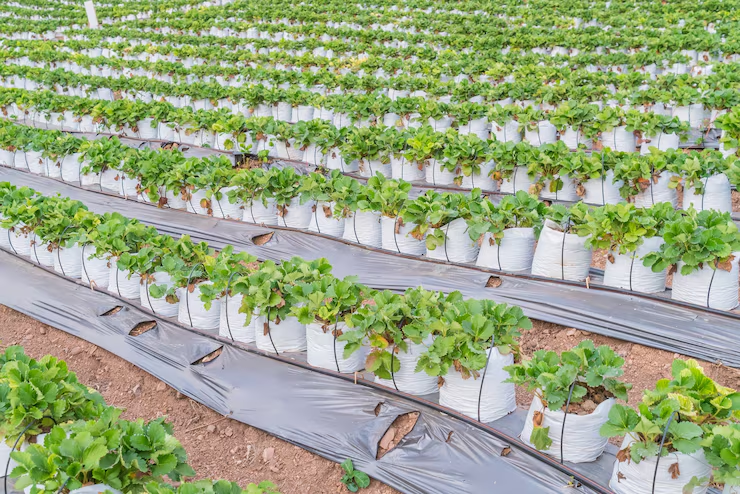
White Black Mulch Film for Agriculture
Keep Soil Cool, Block Weeds, and Grow Better Crops in Every Season
White black mulch film for agriculture is the preferred choice for farmers who need effective soil temperature management alongside reliable weed control. Unlike plain black film that absorbs heat, this dual-layer film features a white reflective top surface that deflects sunlight and keeps the soil cooler. The opaque black underside blocks all light from reaching the soil, preventing weed seeds from germinating. This makes it especially suitable for warm-season crops, summer vegetables, and growing conditions where soil overheating is a common problem. It is a practical, long-lasting solution that reduces input costs while improving crop performance and produce quality.
What Is White Black Mulch Film?
White black plastic mulch film is a two-layer agricultural polyethylene film. The top side is white, which reflects a significant portion of incoming solar radiation. The bottom side is fully black and opaque, which prevents any light from passing through to the soil beneath.
This combination gives farmers a film that actively manages soil temperature from above while suppressing weeds from below. It is widely used in summer vegetable farming, high-value horticulture, and any crop situation where soil overheating or intense weed pressure would otherwise reduce yield and quality.
Who Is This Film Designed For?
- Vegetable farmers growing tomato, capsicum, lettuce, spinach, cabbage, and cucurbits in warm seasons
- Fruit growers cultivating strawberry, watermelon, and muskmelon where soil temperature control affects fruit quality
- Farmers in hot and semi-arid regions of India where summer soil temperatures regularly exceed safe root-zone limits
- Polyhouse and shade net farmers who need consistent soil conditions throughout the year
- Agri entrepreneurs and farm cooperatives managing multiple crops that are sensitive to soil heat stress
Key Problems It Solves
- Soil Overheating: In Indian summers, soil under black film can reach damaging temperatures. The white reflective top surface of white black mulch film reduces soil temperature by 3 to 8 degrees Celsius compared to plain black film.
- Weed Infestation: The fully opaque black underside blocks all light from reaching the soil, preventing weed seeds from germinating without any need for herbicides.
- Excess Soil Moisture Loss: The film seals the soil surface and significantly reduces evaporation, helping crops access consistent moisture between irrigation cycles.
- Poor Fruit Quality in Hot Weather: Overheated soil leads to stressed root systems, uneven fruit development, and lower marketable yield. Temperature moderation through this film directly improves product uniformity and quality.
• High Weeding and Input Costs: Eliminating weed growth reduces manual labor, herbicide use, and overall per-acre input costs across the full crop cycle.
Key Benefits of White Black Mulch Film
- Effective Soil Temperature Control
The most important and unique benefit of white black plastic mulch film for temperature control in farming is its ability to reflect solar heat. The white surface bounces incoming radiation away from the soil, keeping root-zone temperatures significantly lower than with black-only films. This is critical for crops like lettuce, spinach, capsicum, and strawberry, which are highly sensitive to heat stress at the root level.
- Complete Weed Suppression
White black mulch film for soil moisture retention and weed control delivers total weed blockage through its black underside. The zero-light environment beneath the film means weed seeds never get the energy needed to sprout. Farmers report near-complete weed elimination in mulched areas, removing the need for repeated manual weeding or chemical applications.
- Consistent Soil Moisture Retention
By covering the soil surface, the film prevents water from evaporating between irrigation or rainfall events. This keeps the root zone consistently moist, reduces irrigation frequency, and lowers water costs by 30 to 40 percent in most field conditions. It is particularly valuable during the dry months common to most Indian agricultural regions.
- Better Crop and Fruit Quality
Crops that grow in temperature-stable, weed-free, moisture-consistent soil conditions produce more uniform, healthier fruits and vegetables. Farmers using UV stabilized white black mulch film for crop protection consistently report fewer deformed fruits, better color development, and higher marketable yield compared to unprotected fields.
- Suitable for Summer and Year-Round Cropping
Because of its heat-reflecting property, this film extends the practical use of mulch film into the peak Indian summer months when plain black film would cause soil temperatures to rise beyond safe limits. It enables farmers to grow heat-sensitive crops during seasons they previously had to skip.
- Reduced Chemical and Labor Inputs
With weeds suppressed and crops growing in better soil conditions, farmers reduce spending on herbicides, pesticides, and field labor. The film provides a cost-effective, low-maintenance solution that pays back its cost within a single crop cycle through input savings alone.
- UV Stabilized for Long Field Life
Our UV stabilized white black mulch film is manufactured with UV-resistant additives that prevent the film from yellowing, cracking, or losing reflectivity over the growing season. This ensures consistent performance across the full duration of your crop cycle, even in high-intensity UV regions of south and central India.
How to Use White Black Mulch Film: Step-by-Step
- Prepare the Crop Bed: Till, level, and fertilize the soil. If using drip irrigation, lay the drip lines along the bed before installing the film. A flat, firm bed ensures the film makes full contact with the soil surface.
- Lay the Film Correctly: Unroll the white black plastic mulch film with the white side facing upward and the black side facing the soil. The white surface must be exposed to sunlight for effective heat reflection to occur.
- Secure the Edges: Bury or pin the film edges at least 5 to 8 centimeters into the soil on both sides of the bed. This prevents wind uplift and maintains the film’s contact with the soil for proper weed suppression.
- Make Planting Holes: Use a manual punch tool or mechanical hole maker to create holes at your required plant spacing. Hole size should match your transplant or seed type.
- Plant and Monitor: Transplant seedlings or direct sow through the holes. The film begins reflecting heat, blocking weeds, and retaining moisture from the first day. Monitor for edge lifting or damage after heavy rain or wind events.
Product Features and Specifications
Feature | Details |
Material | Virgin polyethylene (LDPE / LLDPE) |
Color | White on top, Black on bottom |
Thickness | 25 micron to 50 micron (customizable) |
Width | 900mm, 1200mm, 1500mm (custom widths available) |
Roll Length | 400m to 1000m per roll |
UV Stabilization | Yes, UV stabilized for full growing season |
Top Surface | White reflective layer for heat and light management |
Bottom Surface | 100% opaque black layer for complete weed suppression |
Tensile Strength | High, tear-resistant for manual and mechanical laying |
Suitable Crops | Vegetables, fruits, summer crops, protected cultivation |
Packaging | Individually wrapped rolls, bulk pallet supply available |
Why Choose Us as Your White Black Mulch Film Supplier in India
- Manufacturer-Direct Supply: As white black mulch film manufacturers and suppliers in India, we offer factory pricing without distributor markups, making bulk procurement cost-effective for farmers and agri-dealers alike.
- Verified UV Stabilization: Every roll is tested for UV resistance to ensure the white surface retains its reflectivity and the black layer maintains full opacity throughout the growing season.
- Custom Sizes Available: We manufacture in custom widths, thicknesses, and roll lengths to match your specific bed dimensions, crop type, and field layout requirements.
- Pan-India Delivery Network: We supply farmers, agri cooperatives, FPOs, and input dealers across Maharashtra, Gujarat, Rajasthan, Madhya Pradesh, Andhra Pradesh, Karnataka, Tamil Nadu, Uttar Pradesh, and Punjab.
- Agronomic Support: Our field team helps you identify the right film specification for your crop, season, and soil type so you get the best results from every roll.
- Consistent Quality Standards: All products go through thickness, tensile strength, and UV stabilization checks before dispatch. You receive the same quality whether you order one roll or a full truckload.
Crops and Farming Sectors We Serve
- Summer Vegetable Farming: Tomato, capsicum, chilli, cucumber, brinjal, and bitter gourd in seasons where soil temperature management is critical
- Cool-Season Crops in Hot Climates: Lettuce, spinach, coriander, and cabbage where white film prevents root heat stress
- Fruit Cultivation: Strawberry, watermelon, and muskmelon where consistent soil temperature improves fruit size and sweetness
- Export-Quality Produce Farms: High-value crops requiring clean, uniform produce with minimal chemical use
- Polyhouse and Net House Farming: Compatible with protected cultivation setups requiring year-round temperature-stable growing conditions
- Floriculture: Rose, gerbera, and other commercial flowers grown in high-temperature regions where soil cooling improves bloom quality
FAQ’s About White-black mulch film
A: White black mulch film has a white reflective top surface and a black opaque bottom surface. The white side reflects solar heat and keeps soil temperature lower, while the black side blocks light to prevent weed growth. Plain black film only suppresses weeds but absorbs more heat, making it unsuitable for heat-sensitive crops in summer.
A: The white side always faces upward toward the sky. This allows it to reflect sunlight and reduce soil temperature. The black side must face downward and touch the soil to block light and prevent weed germination. Installing it the wrong way reduces both benefits significantly.
A: UV stabilized white black mulch film for crop protection typically reduces soil temperature by 3 to 8 degrees Celsius compared to plain black film. The actual reduction depends on sunlight intensity, air temperature, and film quality. This range is enough to protect most heat-sensitive vegetable and fruit crops during Indian summers.
A: Yes. White black plastic mulch film for temperature control in farming is specifically recommended for summer crops like tomato, capsicum, cucumber, and leafy greens in India. The white surface prevents soil from overheating, which protects root systems and supports consistent crop growth during hot months.
A: Yes. White black mulch film for soil moisture retention and weed control provides complete weed suppression through its fully opaque black underside. It blocks all sunlight from reaching the soil, which prevents weed seeds from germinating. Farmers report near-total weed elimination in the mulched area throughout the crop cycle.
A: The film creates a physical barrier over the soil surface that prevents water from evaporating between irrigation events. This keeps the root zone consistently moist and can reduce irrigation water requirement by 30 to 40 percent depending on the crop, soil type, and weather conditions.
A: 25 micron is standard and works well for most vegetable and fruit crops with manual laying. For longer crop durations, mechanical laying, or rocky soil conditions, 30 to 50 micron films are more suitable. Our team can recommend the right thickness based on your specific farming situation.
A: Yes. White black plastic mulch film is fully compatible with sub-surface drip irrigation systems. Install the drip lines along the prepared bed before laying the film. Water is delivered directly to the root zone while the film eliminates surface evaporation, maximizing irrigation efficiency.
A: A quality UV stabilized white black mulch film typically lasts one full growing season of 4 to 6 months without significant degradation. Thicker films of 40 to 50 micron can sometimes be carefully recovered and reused for a second season if the film is not torn during removal.
A: You can purchase directly from white black mulch film manufacturers and suppliers in India for the best pricing and assured quality. Direct buying ensures manufacturer-verified product specifications, consistent supply for bulk orders, and access to technical support for application guidance.
A: Yes. White black mulch film provides soil temperature control and weed management through purely physical means, with no chemicals involved. It is accepted in organic and integrated farming systems as a non-chemical soil and crop management tool.
A: Crops that benefit most are those sensitive to soil heat stress or grown during hot seasons. These include lettuce, spinach, capsicum, strawberry, tomato grown in summer, cucumber, and muskmelon. It is also highly effective for any crop in regions where soil temperatures regularly exceed safe root-zone limits during the growing season.