
In 2024, a large-scale agricultural cooperative in Madhya Pradesh faced challenges with their underground water distribution system. Frequent leaks, corrosion damage, and high maintenance costs plagued their existing metal pipeline network serving 500 acres of farmland.
After consulting with hdpe pipes suppliers in Indore, the cooperative replaced their entire underground infrastructure with high-density polyethylene piping. The project included 15 kilometers of underground water pipe HDPE for the main distribution network and secondary lines for drip irrigation systems.
Within six months, the results exceeded expectations. Leakage reduced by 85%, maintenance costs dropped by 70%, and water distribution efficiency improved by 40%. The corrosion resistant pipes for underground applications eliminated the rust and degradation issues that had plagued the metal system. This case demonstrates why HDPE pipes have become the preferred choice for underground installations across India.
Understanding HDPE Pipes: What Makes Them Ideal for Underground Use
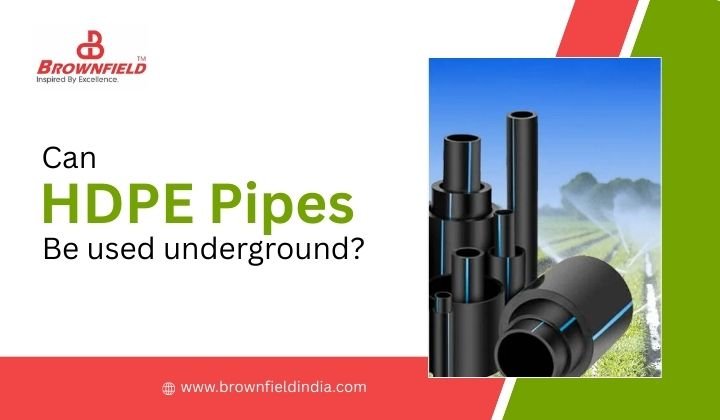
HDPE pipes (High-Density Polyethylene) are advanced plastic pipes manufactured from thermoplastic polymers known for exceptional strength, flexibility, and durability. These pipes have revolutionized underground piping systems across residential, agricultural, industrial, and municipal applications worldwide.
The unique molecular structure of high-density polyethylene provides remarkable resistance to chemicals, corrosion, and environmental stress. Unlike traditional materials such as metal or concrete, HDPE pipes do not rust, corrode, or deteriorate when buried underground, making them ideal for long-term subsurface installations.
HDPE manufacturers in Indore and across India produce these pipes in various diameters, pressure ratings, and configurations to suit different underground applications. From small residential water lines to large industrial pipelines, the versatility of these materials addresses diverse infrastructure needs.
Can HDPE Pipes Be Buried Underground? The Definitive Answer
Yes, HDPE pipes are specifically designed and widely used for underground installations. In fact, underground burial represents one of the primary applications where these pipes excel compared to alternative materials. The question is not whether they can be buried, but rather why they perform so exceptionally well in subsurface environments.
HDPE pipe for underground use offers distinct advantages over traditional materials. The flexible nature of these pipes allows them to withstand ground movement, settling, and seismic activity without cracking or breaking. This flexibility proves crucial in areas with unstable soil conditions or regions prone to earthquakes.
The material’s resistance to chemical attack from soil elements, groundwater contaminants, and biological organisms ensures long lasting underground pipes that maintain structural integrity for decades. Research from the Plastic Pipe Institute confirms that properly installed HDPE pipes can serve underground for 50-100 years or more.
Advantages of HDPE Pipes for Underground Applications
1. Superior Corrosion and Chemical Resistance
One of the most significant benefits of HDPE pipes underground is their complete immunity to corrosion. Unlike metal pipes that rust and deteriorate when exposed to moisture and soil chemicals, HDPE pipes remain unaffected by corrosive elements commonly found in underground environments.
This corrosion resistant pipes for underground characteristics eliminates the degradation, scaling, and structural failure that plague traditional metal piping systems. The smooth interior surface maintains its condition indefinitely, ensuring consistent flow rates and water quality throughout the pipe’s service life.
Chemical resistance extends to a wide range of substances including acids, alkalis, salts, and organic compounds. This versatility makes HDPE pipes suitable for diverse underground applications from potable water to industrial waste transport.
2. Exceptional Flexibility and Impact Resistance
HDPE pipes possess remarkable flexibility that allows them to bend and flex without breaking. This property proves invaluable during installation and throughout the pipe’s service life as ground shifts, settles, or experiences seismic activity.
The material can withstand impact and shock loads that would shatter rigid pipes. During installation, HDPE pipes resist damage from rocks, equipment, and backfilling operations that commonly damage more brittle materials.
Key flexibility advantages include:
- Ability to follow ground contours without multiple fittings
- Resistance to freeze-thaw cycles and ground movement
- Reduced need for thrust blocks and anchoring systems
- Lower installation costs due to simplified routing
- Fewer joints and connections reducing leak potential
3. Leak-Proof Joining Systems
Modern HDPE pipe installation underground utilizes advanced fusion welding techniques that create truly leak proof piping system connections. Heat fusion welding joins pipe sections by melting the material and fusing them into a single, homogeneous piece.
These fusion joints are as strong as the pipe itself and completely eliminate the risk of leaks at connections. Unlike mechanical joints, gaskets, or adhesives used with other materials, fusion welds cannot separate, deteriorate, or fail over time.
The leak proof piping system characteristic dramatically reduces water loss, contamination risk, and maintenance requirements. According to the American Water Works Association, fusion-welded HDPE pipes experience significantly fewer leaks compared to traditional joined systems.
4. Lightweight and Easy Installation
HDPE pipes weigh considerably less than metal or concrete alternatives of comparable diameter and pressure rating. This lightweight nature simplifies transportation, handling, and installation, reducing labor costs and equipment requirements.
HDPE coil pipe manufacturers produce smaller diameter pipes in long coil lengths, eliminating numerous joints and reducing installation time. A single coil can replace dozens of shorter rigid pipe sections, dramatically simplifying underground installation projects.
The ease of handling allows smaller crews to install larger projects efficiently. Less heavy equipment is needed for trenching and placement, reducing overall project costs and environmental impact.
5. Long Service Life and Low Maintenance
The durability of HDPE pipes translates to extended service life with minimal maintenance requirements. Unlike materials that require periodic inspection, coating, or replacement, properly installed HDPE pipes function reliably for years with virtually no maintenance.
This long lasting underground pipe characteristic provides exceptional value over the system’s lifetime. While initial costs may be comparable to other materials, the total lifecycle cost of HDPE pipes is typically much lower due to eliminated maintenance and replacement expenses.
Common Underground Applications for HDPE Pipes
1. Agricultural Water Supply and Irrigation
HDPE pipe for irrigation has become the industry standard for modern agricultural water distribution systems. The material’s durability, flexibility, and leak-free performance make it ideal for underground irrigation pipe system applications ranging from small farms to large commercial operations.
HDPE pipe for farming handles the demanding conditions of agricultural environments including variable water quality, chemical exposure from fertilizers, and challenging soil conditions. The smooth interior maintains optimal flow rates while resisting buildup and clogging.
Drip irrigation mainline pipe HDPE systems benefit particularly from the material’s flexibility and fusion joining capabilities. Long continuous runs without joints minimize pressure loss and maximize irrigation efficiency across extensive field areas.
2. Municipal Water Distribution
Cities and municipalities increasingly specify underground water pipe HDPE for new installations and replacement of aging infrastructure. The material’s longevity and leak resistance help conserve precious water resources while reducing operational costs.
Large diameter HDPE pipes can handle high-pressure municipal water distribution requirements while maintaining flexibility that simplifies installation in urban environments. The ability to directionally drill or pull pipes through existing infrastructure reduces disruption and costs.
3. Industrial and Commercial Applications
Industrial underground pipeline : Systems utilize HDPE pipes for process water, cooling systems, chemical transport, and waste management. The chemical resistance and durability make these pipes suitable for harsh industrial environments where other materials fail.
Underground drainage HDPE pipe : Handles stormwater management, wastewater collection, and industrial effluent transport. The smooth interior prevents buildup and clogging while the durable exterior withstands burial beneath paved surfaces and heavy traffic areas.
4. Residential Plumbing Systems
Homeowners benefit from HDPE pipes for underground service lines, well connections, and yard irrigation systems. The material’s resistance to freezing, corrosion, and root intrusion ensures reliable long-term performance with minimal maintenance.
Proper Installation Techniques for Underground HDPE Pipes
Successful HDPE pipe installation underground requires attention to several key factors. Proper trenching, bedding, backfilling, and joining techniques ensure optimal performance and longevity of the piping system.
Trench width should provide adequate clearance around the pipe for proper compaction. HDPE pipes typically require narrower trenches than rigid alternatives due to their flexibility. Depth should account for frost line, traffic loads, and local building codes.
Bedding material should be clean, angular gravel or sand free from sharp rocks that could damage the pipe. Proper bedding provides uniform support and prevents point loading that could deform the pipe over time.
Backfilling must be done carefully in thin lifts with proper compaction. HDPE pipes suppliers recommend specific backfill procedures to prevent damage during installation while ensuring adequate support once buried.
Cost Considerations and Economic Benefits
The HDPE pipe price per meter varies based on diameter, pressure rating, and wall thickness. While initial material costs may be comparable to or slightly higher than some alternatives, the total installed cost of HDPE pipes is often lower due to reduced labor and equipment requirements.
Long-term economics strongly favors HDPE pipes for underground applications. The elimination of corrosion-related failures, leak repairs, and premature replacement provides substantial savings over the system’s lifecycle. Many hdpe pipes suppliers in Indore offer competitive pricing that makes these pipes accessible for projects of all sizes.
Energy savings from reduced pumping friction losses add to the economic benefits. The smooth interior of HDPE pipes maintains low friction factors throughout the pipe’s service life, unlike materials that roughen or scale over time.
Selecting the Right HDPE Pipe Supplier
Choosing quality hdpe pipes suppliers in Indore ensures you receive pipes manufactured to proper standards with appropriate pressure ratings and material specifications. Reputable HDPE pipe manufacturers in India certify their products to national and international standards.
Look for suppliers who provide technical support, installation guidance, and quality certifications. Established hdpe manufacturer in Indore companies offer comprehensive product lines with various diameters, pressure classes, and configurations to match project requirements.
Consider suppliers who stock adequate inventory for timely project completion. HDPE pipes suppliers near me with local warehouses can respond quickly to project needs and provide replacement materials if required.
FAQ’s About HDPE Pipes Underground
1. Can HDPE pipe be buried?
Yes, HDPE pipes are specifically designed for underground burial and excel in subsurface environments with 50-100 year service life expectancy.
2. Is HDPE better than PVC for underground use?
HDPE pipes offer superior flexibility, fusion-welded joints, freeze resistance, and impact strength compared to PVC for underground applications and challenging conditions.
3. How long will HDPE last underground?
Properly installed HDPE pipes last 50-100 years underground with minimal maintenance, far exceeding traditional materials like metal or concrete pipes.
4. What is the best pipe for underground use?
HDPE pipes are considered among the best for underground applications due to corrosion resistance, flexibility, leak-proof joints, and exceptional longevity.
5. Are HDPE and PEX the same?
No, HDPE pipes and PEX are different materials. HDPE uses high-density polyethylene while PEX is cross-linked polyethylene with different properties.
6. What is the best plastic for the underground?
HDPE pipes represent the optimal plastic for underground use, offering superior durability, chemical resistance, and flexibility compared to other plastic materials.
7. Is HDPE more expensive than PVC?
Initial HDPE pipe price per meter may be slightly higher, but lower installation costs and longer lifespan make total ownership costs competitive.
8. What is the disadvantage of HDPE?
HDPE pipes have limited UV resistance when exposed to sunlight, require special fusion equipment for joining, and have lower temperature limits than metal.
9. What is the best pipe to use for a sewer line?
HDPE pipes excel for sewer lines due to chemical resistance, leak-proof joints, flexibility, and smooth interior that prevents blockages and root intrusion.
10. How do you connect HDPE to a PVC pipe?
Connect HDPE pipes to PVC using mechanical transition fittings with stainless steel clamps or flanged connections that accommodate both materials properly.
Conclusion
HDPE pipes represent the optimal solution for underground installations across residential, agricultural, municipal, and industrial applications. Their exceptional corrosion resistant pipes for underground properties, fusion-welded leak proof piping system connections, and 50-100 year service life provide unmatched value and reliability. From HDPE pipe for irrigation to large-scale industrial underground pipeline projects, these versatile pipes deliver superior performance in subsurface environments. Contact experienced hdpe pipes suppliers in Indore today to discover how underground water pipe HDPE systems can enhance your infrastructure projects with proven durability and cost-effectiveness for decades to come.